Lifestyle & Market Intelligence · May 2026
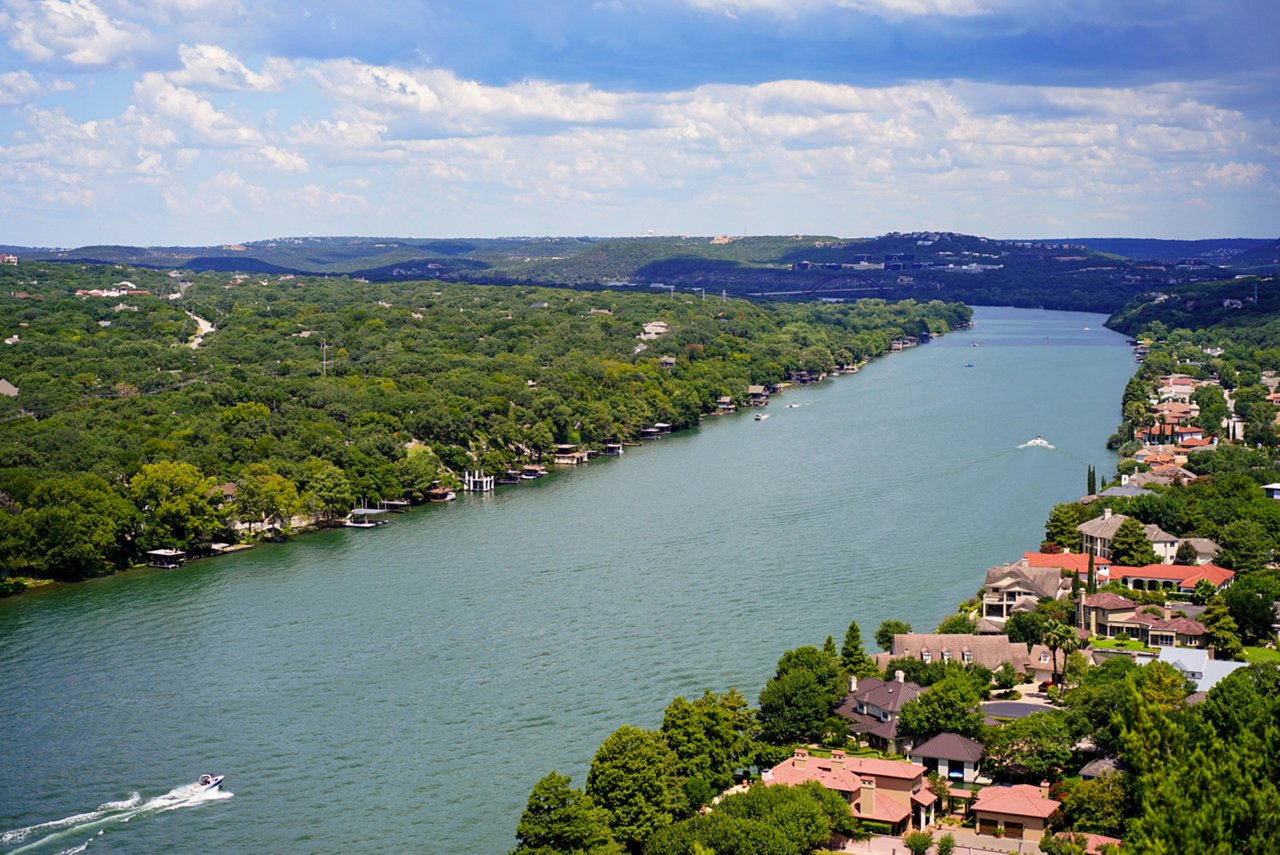
The Barton Creek Greenbelt runs for 12 miles through 809 acres of protected limestone canyon on the southwestern edge of Austin. It is one of the most heavily used natural recreational areas in Texas and one of the most consistent drivers of luxury home values in the 78704 submarket. This is what that premium actually looks like in the transaction data — and why it has held across every Austin market cycle of the past 30 years.
Call (512) 608-8811 Search Barton Hills Listings
12+ miles Greenbelt Trail Length Through 809 acres of protected canyon | 5+ Access Points from 78704 Spyglass, Campbell's Hole, Twin Falls & more | 10–18% Proximity Premium Greenbelt-adjacent vs. outer 78704 blocks | Year-round Trail Usability Hiking and running in all seasons |
Real estate agents describe amenity proximity in the language of marketing. This post describes the Barton Creek Greenbelt in the language of data — and then makes the case that the two are not as far apart as buyers sometimes assume. The premium attached to Greenbelt-adjacent addresses in Barton Hills is not sentiment dressed up as real estate math. It is a structural supply-and-demand relationship that has held across three decades of Austin growth, and the mechanism behind it explains why it is likely to hold for the next three decades as well.
What the Barton Creek Greenbelt Actually Is
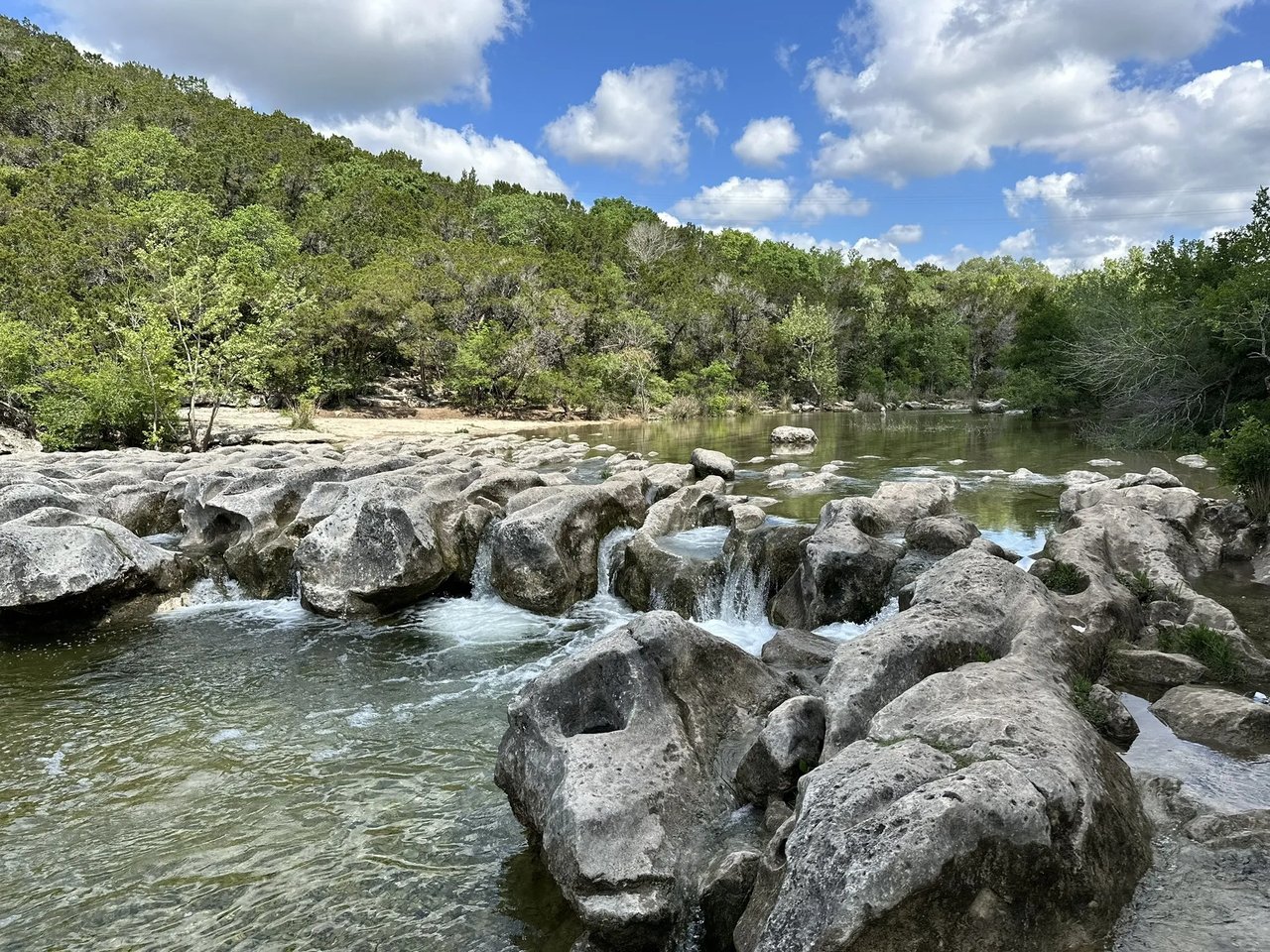
The Barton Creek Greenbelt is a 12-mile linear park running through a limestone canyon along Barton Creek on the southwestern edge of Austin. The City of Austin manages 809 acres of protected land along the corridor — a ribbon of wilderness tucked between some of the most valuable residential real estate in the Texas capital, accessible from multiple entry points that range from developed trailheads with parking to quiet neighborhood paths that dead-end into the canyon.
The terrain is quintessentially Central Texas: exposed limestone bedrock, clear-running creek water (seasonal — flow depends on rainfall), ancient live oaks and cypress trees, and cliff faces used by climbers year-round. The geological substrate that makes the Greenbelt visually remarkable is the same Edwards Aquifer formation that feeds Barton Springs Pool — which is why the two amenities are geographically inseparable and why they are often discussed together as the defining natural amenity cluster of south Austin.
The Greenbelt's multiple access points from 78704 are one of its defining characteristics for neighborhood residents. Barton Hills homeowners on the western blocks can reach trail entry in under five minutes on foot via the Homedale or Gus Fruh entry. Zilker residents can also easily access the canyon from the Homedale Drive entry, which connects to the broader trail system and ultimately to Barton Springs Pool. Travis Heights and Bouldin Creek residents are a short bike ride from the Barton Springs entry. The result is a neighborhood cluster where the Greenbelt is not a distant destination but a daily backdrop — and where the difference between having trail access on foot versus having it within a short drive is the difference between using it regularly and using it occasionally.
The Proximity Premium: What the Data Shows
Measuring the Greenbelt proximity premium in 78704 requires the same careful methodology as any amenity premium analysis: controlling for property type, lot size, condition, and construction quality to isolate the location variable from the product variables. When that control is applied, a consistent pattern emerges in the transaction data.
Properties in Barton Hills with direct Greenbelt adjacency or within a five-minute walk of a trail entry point consistently command a premium of 10–18% per square foot compared to comparable product on interior blocks at greater distance from trail access. On a $2.5M home, that represents $250,000–$450,000 in absolute value difference for the same quality of structure and finish in the same neighborhood.
The premium is not uniform across all Greenbelt-adjacent positions. Three variables create meaningful differentiation within the proximity band:
Direct adjacency vs. walkable proximity. Properties whose rear lots abut the Greenbelt boundary — or whose street ends at a trail entry — carry the highest premium within the proximity band. Properties within a five-minute walk of an entry point carry a meaningful premium relative to the broader neighborhood but a smaller one than direct adjacency. This gradient is intuitive: the experience of stepping out your back door onto a trail is meaningfully different from walking five minutes to reach the same trail.
Canyon views vs. trail access only. The elevated western blocks of Barton Hills that overlook the canyon — rather than just accessing it from the canyon floor — capture an additional premium for the visual experience of the landscape. Homes with Greenbelt views command more per square foot than homes with equivalent trail access but no view component.
Specific entry point proximity. Not all access points are equal. The Homedale and Gus Fruh entries, Campbell's Hole access, and the trail connections from the western Barton Hills streets serve the most used and most desirable sections of the Greenbelt. Properties within walking distance of these specific points capture the full proximity premium. Properties nearer to less-used or less-scenic access points capture a more modest version of it.
The Premium Is Structural, Not Cyclical
The Greenbelt proximity premium has persisted through every Austin market cycle since the neighborhood developed — the 1990s correction, the post-2001 slowdown, the 2008–2009 trough, and the post-2022 normalization. The reason is structural: the supply of land within walking distance of the Greenbelt cannot increase. As Austin's population grows, the ratio of people who want to live near the Greenbelt to the number of homes that can satisfy that want tilts further in favor of existing property owners with each passing year.
The Streets That Capture the Most Premium
Within Barton Hills — the neighborhood with the closest overall proximity to the Greenbelt — a specific set of streets consistently generate the most Greenbelt-driven demand and command the highest prices relative to their structural quality.
Oak Lane and its cross streets. The Oak Lane corridor in western Barton Hills sits within direct reach of Greenbelt canyon access and has been one of the most consistently active streets for both teardown activity and luxury new construction. The combination of Greenbelt proximity and the larger lot sizes typical of this section of Barton Hills makes Oak Lane addresses among the most sought-after in the neighborhood.
Cedarview Drive. One of Barton Hills' most elevated streets, Cedarview offers both canyon views and trail access — the combination that carries the strongest per-SF premium in the neighborhood. New construction on Cedarview has delivered some of the highest exit prices in 78704, supported by the view and trail access premiums working simultaneously.
Oakhaven Drive and the western grid. The streets running perpendicular to the canyon on the western edge of Barton Hills — Oakhaven, Foxglen, Rae Dell — all sit within easy walking distance of trail entry points and carry a meaningful Greenbelt premium. These are the blocks where The Davis Agency's six off-market teardown transactions were concentrated, reflecting builder confidence in the premium that this location delivers at exit.
Spyglass Drive and the Zilker canyon connection. For Zilker buyers, Spyglass Drive is the primary connection to the Greenbelt — a dedicated trail entry that also connects to Barton Springs Pool and the broader trail network. Properties near the Spyglass entry capture a dual premium: Greenbelt access plus Zilker Park and Barton Springs proximity simultaneously, which is the most compelling lifestyle combination in the 78704 submarket.
The Lifestyle: What Daily Greenbelt Access Actually Looks Like
Data can quantify the premium. It cannot fully describe why buyers pay it. The following is an honest account of what proximity to the Barton Creek Greenbelt looks and feels like for residents who actually live adjacent to it — because the lived experience is what the premium is ultimately compensating for.
The morning run. In a neighborhood where morning runs involve stepping off the front porch and descending into a limestone canyon within two minutes, the physical and psychological experience of daily exercise changes. The Greenbelt trail system — connecting through canyon sections, along creek beds, and across exposed bedrock — offers 12 miles of varied terrain without a single mile on pavement. For residents who run or hike daily, this is not a recreational amenity they drive to on weekends. It is the built environment they inhabit every morning.
The after-work swim. The Greenbelt's swimming holes — Campbell's Hole, Twin Falls, Sculpture Falls — are spring-fed and cold year-round. On a 102-degree Austin afternoon in August, the proximity of a natural swimming hole within a 10-minute walk from home is not a luxury amenity. It is a functional necessity that residents of the closest blocks use with the same casual regularity that urban dwellers use a nearby coffee shop. The frequency of use is what separates genuine proximity from theoretical proximity, and residents within walking distance use it frequently.
The evening walk. The canyon light in the late afternoon — the way it falls on limestone cliff faces and reflects off the creek — is the kind of experience that takes years to become ordinary and never quite does. Residents who have lived Greenbelt-adjacent for a decade still describe evening walks into the canyon as genuinely restorative in a way that walks in urban parks are not. This is the least quantifiable part of the premium and arguably the most important to the buyers who actually pay it.
The dog culture. The Greenbelt is one of Austin's most dog-friendly recreational spaces, and the community that forms around it — morning trail regulars, the unofficial swimming hole congregation on summer afternoons, the evening walkers — creates a neighborhood social fabric that is distinctive to the canyon's edge. Residents describe it consistently as one of the unexpected benefits of Greenbelt-adjacent living: the neighborhood connections formed on the trail over years of shared mornings in the same canyon.
Looking for Greenbelt-adjacent homes in Barton Hills or Zilker?
The Davis Agency tracks Greenbelt-adjacent inventory in 78704 closely — including off-market opportunities in the western Barton Hills blocks that never reach Zillow. If proximity to the canyon is your priority, that access is worth a conversation.
Year-Round Access: Why Seasonality Does Not Dilute the Premium
One of the questions buyers from outside Austin ask about the Greenbelt is whether it is genuinely usable year-round — or whether the Texas summer heat or periodic drought conditions make it a six-month amenity dressed up as a twelve-month one.
The honest answer is that the Greenbelt is useful in every season, though what it offers changes with the seasons in ways that residents of the closest blocks come to know and appreciate.
Summer (June–September): The swimming holes are the primary draw — cool water in extreme heat, shaded canyon sections for trail running in early morning before temperatures peak. The trail surface retains moisture in the limestone creek sections and stays cooler than the surrounding neighborhood. Summer is the highest-use season for the swimming sections.
Fall and spring (October–November, March–May): The most comfortable hiking and running conditions of the year. The canyon vegetation is at its most lush in spring and most colorful in fall. Water levels are typically higher in spring following winter rains. These are the seasons that convert buyers who are touring Greenbelt-adjacent homes — the canyon in March or October is about as beautiful as Austin gets.
Winter (December–February): Lower crowds on the trail, which residents of the closest blocks value. Comfortable hiking temperatures. The swimming holes are cold but accessible to the hardier regulars. The canyon's winter character — bare cypress along the creek, the sound of water over limestone with few other people around — is distinct from summer and equally compelling in its own way.
The trail is occasionally closed temporarily after heavy rainfall when creek flooding makes sections hazardous. These closures are temporary and routine — rarely lasting more than a few days — and do not materially affect the year-round utility of the amenity for adjacent residents.
How the Greenbelt Premium Compares to the Barton Springs Premium
The Barton Creek Greenbelt and Barton Springs Pool are geographically adjacent and lifestyle-complementary, but they generate slightly different premium profiles in the transaction data — and understanding the distinction helps buyers choose the right block position for their specific lifestyle priorities.
The Barton Springs premium, detailed in our companion post, is strongest in Zilker — where the closest addresses are within a 10-minute walk of the pool entrance and the lifestyle is primarily organized around swimming. The premium is concentrated in a tight radius around the pool and tapers quickly with distance.
The Greenbelt premium is broader in geographic scope — it extends along the full western edge of Barton Hills and into the southern portions of Zilker — but is highest at the points of direct adjacency or formal trail entry proximity. It is less concentrated than the Barton Springs premium and more distributed across the neighborhood's western blocks.
The addresses that capture both premiums simultaneously — western Barton Hills blocks that are within walking distance of both the Greenbelt trail system and Barton Springs Pool — carry the combined premium that produces the highest per-SF values in the entire 78704 submarket. These are the addresses that The Davis Agency's off-market transaction history is concentrated in, and they are the addresses that generate the most consistent builder demand at the highest land prices.
What This Means for Sellers
If you own a home in the western Barton Hills blocks within walking distance of a Greenbelt entry point, the Greenbelt proximity is one of your property's most valuable differentiators — and one that many sellers undervalue because they have lived with it so long that it has become ordinary. An agent who presents the Greenbelt access story compellingly — including walking time to specific entry points, the specific trail experience, and the premium that proximity commands in recent comps — consistently achieves stronger results than one who lists the address and lets buyers discover the amenity on their own.
Frequently Asked Questions
Is the Barton Creek Greenbelt open year-round?
Yes, with occasional temporary closures. The trail system is accessible and used in every season, though specific sections are periodically closed after heavy rain events when creek levels create unsafe conditions. These closures are typically brief — days rather than weeks — and are communicated by the City of Austin's Parks and Recreation Department. The swimming holes have no official season; they are accessible whenever the trail is open, though natural swimming is most popular from April through October when temperatures make cold water appealing.
Are dogs allowed on the Greenbelt?
Yes. The Barton Creek Greenbelt is one of Austin's most dog-friendly parks. Dogs are permitted on leash throughout the trail system. Swimming with dogs in the creek is common and generally accepted at the swimming hole areas. This is a meaningful lifestyle benefit for residents of adjacent neighborhoods and contributes to the community character of Greenbelt-adjacent living.
How does drought affect the Greenbelt?
Barton Creek's flow is sensitive to rainfall and drought conditions. During extended dry periods, portions of the creek can run low or stop flowing entirely in some sections, which reduces the swimming hole experience. The trail system itself remains accessible regardless of water levels. Residents who have lived Greenbelt-adjacent for multiple years develop a clear sense of the water cycle and adjust their use accordingly — lean years on swimming, full years on hiking. The long-term average flow is sufficient to support year-round hiking and seasonal swimming, which is the experience most buyers are purchasing proximity to.
What is the risk of Greenbelt flooding affecting adjacent homes?
The Greenbelt corridor itself is designated as a floodplain, and significant rainfall events can produce dramatic increases in creek volume. The homes along the Greenbelt boundary in Barton Hills are generally elevated above the flood zone — the canyon topography creates a natural buffer between the flood corridor and the residential neighborhood above it. That said, buyers of homes adjacent to or near the Greenbelt boundary should pull the FEMA flood map for the specific parcel and verify the home's flood zone designation as part of their due diligence. Most Barton Hills residential parcels adjacent to the Greenbelt are outside the active flood zone, but verification is warranted on any specific property.
How do I find Greenbelt-adjacent homes that are not publicly listed?
The same way you find any off-market property in 78704 — through an agent with active relationships in the neighborhood who tracks what is available before it becomes public. The Davis Agency's off-market track record in the western Barton Hills blocks specifically includes multiple transactions in the streets closest to the Greenbelt. If Greenbelt adjacency is your priority, a direct conversation about current availability — on and off market — is the right starting point.
Related Reading from The Davis Agency
→ The Barton Springs Effect: How Austin's Most Iconic Amenity Drives Property Values
→ Zilker vs. Barton Hills vs. Bouldin Creek: The 78704 Neighborhood Breakdown
→ Luxury New Construction in Barton Hills: A Buyer's Guide from Lot to Keys
→ The 78704 Land Value Report: What Infill Lots Are Actually Worth in 2026
→ The Off-Market Advantage: How The Davis Agency Closes Deals Before They Hit MLS
Find Your Home on the Greenbelt
The Davis Agency tracks Greenbelt-adjacent inventory in the western Barton Hills and Zilker blocks — including off-market and pre-market opportunities in the streets closest to trail access. If the canyon is the lifestyle you are buying, let us put the right inventory in front of you.
Search Current Listings Call (512) 608-8811
Or email [email protected]. Derrik responds personally.
Derrik Davis · Broker/Owner, The Davis Agency · CLHMS Certified · TREC License #558841 · Serving 78704 and the greater Austin luxury market since 2006.