Austin Lifestyle · June 2026
Formula 1 held its first United States Grand Prix at Circuit of the Americas in Austin in 2012. It has returned every year since. More than 430,000 fans now attend across the three-day race weekend, generating over $1 billion in annual economic impact on the Travis County area and making the Austin race one of the highest-attended events on the entire Formula 1 calendar. The question worth understanding is not whether F1 belongs in Austin. It is how Austin earned that place — and what it means for a city to host one of the most globally watched sporting events every October.
Talk to The Davis AgencySearch Austin Listings
430,000+ 3-Day Weekend Attendance Top 3–4 on the entire F1 calendar by attendance | $10B+ Cumulative Economic Impact Central Texas region since COTA debuted in 2012 | Through 2034 Contract Extended COTA will become the longest-serving US F1 venue | Oct 23–25 2026 Race Weekend Formula 1 MSC Cruises United States Grand Prix |
Austin is now one of three US cities that hosts a Formula 1 Grand Prix — alongside Miami and Las Vegas. What distinguishes the Austin race from its American counterparts is not simply that it came first. It is that COTA was built specifically for Formula 1: a permanent circuit designed from scratch for the sport, located outside the city rather than threading through downtown streets, and operating year-round as a motorsport and entertainment venue rather than as a temporary takeover of public infrastructure. That permanence — and the authentic racing atmosphere it produces — is why many serious F1 fans describe the Austin race as the "real" US Grand Prix in a way that Miami and Las Vegas, for all their spectacle, have not yet fully claimed.
How COTA Came to Be
The United States Grand Prix left the Formula 1 calendar after the 2007 Indianapolis race, when a dispute between the organizers and Formula 1 ended a relationship that had never been entirely smooth. For five years, F1 had no American presence. The sport's global audience was growing, but the world's largest economy was not on the calendar.
The Circuit of the Americas project emerged in Austin as the answer to that gap. COTA's founders — led by chairman Bobby Epstein — worked with Formula 1, the State of Texas, and the City of Austin to develop a permanent facility purpose-built for the sport. The $400 million investment produced a circuit that opened in 2012 and hosted the US Grand Prix in November of that year for the first time in the sport's return to American soil. Sebastian Vettel won the inaugural race at COTA; what he won it on was a circuit that had been designed to give Formula 1 a permanent American home rather than a rotating series of street races and temporary arrangements.
The circuit was designed by Hermann Tilke, the German architect responsible for most of the circuits added to the F1 calendar in the modern era, with a layout that incorporated design elements borrowed from some of the sport's most beloved tracks: the long sweeping Turn 1 uphill complex that references Silverstone's Maggotts-Becketts section, the stadium section in the middle of the circuit that creates a natural amphitheater for spectators, and a back-straight that allows overtaking in a sport where passing opportunities can be scarce. The layout is not a street circuit; it is not a converted road course; it is a racing circuit, built to race.
Turn 1: The Signature Moment
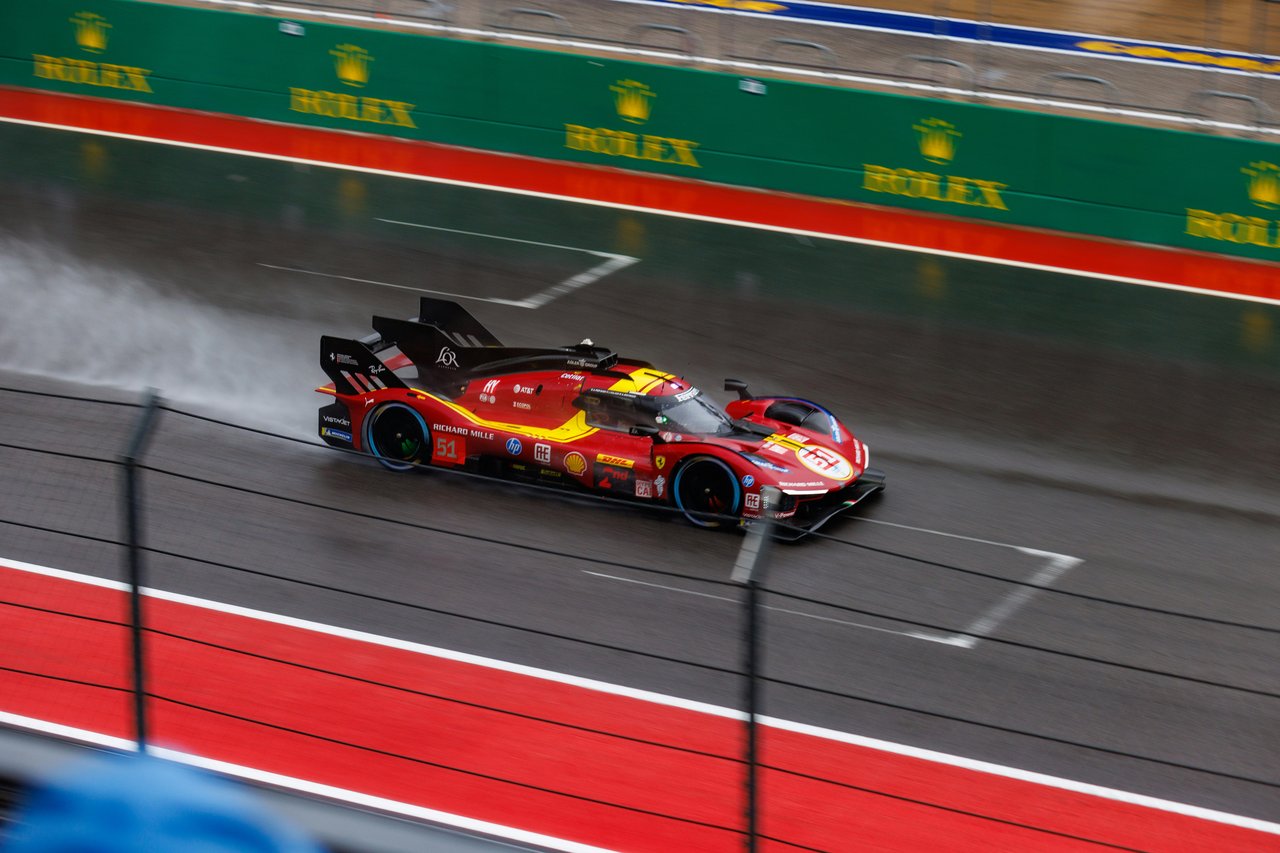
The first corner at COTA is one of the most dramatic in all of Formula 1. Cars accelerate from the start-finish straight and crest a steep uphill climb before plunging into a hairpin — an approach that compresses the entire field at the race start and produces some of the most spectacular first-lap photography of any event on the calendar. The grandstand at Turn 1 is one of the most coveted viewing positions in world motorsport. The engineers who built COTA understood that great racing circuits are designed for spectators as much as for drivers — and Turn 1 is the clearest expression of that philosophy.
What the Numbers Show: Attendance and Economic Impact
The Austin race is consistently one of the highest-attended events in Formula 1. F1 reports that in recent years the race has attracted over 430,000 fans. To put that in context: most European F1 races — including traditional circuits like Spa, Monza, and Suzuka — draw significantly smaller weekend crowds. Austin's position in the top three or four races globally by attendance reflects both the growth of F1's American audience and the specific pull of Austin as a destination that extends beyond the race.
The economic impact on Austin's economy has been substantial and sustained. According to the Travis County Commissioners Court, since arriving in Austin in 2012, F1's United States Grand Prix has generated over $10 billion of economic impact for the Central Texas region. This includes over $1 billion of economic impact in the Travis County area annually.
The annual $1 billion impact in Travis County alone is a figure that deserves context. Austin's hotel sector, restaurant industry, retail corridor, and hospitality infrastructure benefit from an influx of high-spending visitors — predominantly international and out-of-state travelers — who spend at a rate that exceeds most other Austin event weekends. The F1 audience, traveling from Europe, Asia, Latin America, and across the US, is among the highest average-spend visitor categories that any US city hosts. The restaurants that serve F1 weekend in Austin are not serving the same audience as a typical October weekend; they are serving an international traveling audience that has booked months in advance and built a multi-day Austin experience around the race.
COTA vs. Miami vs. Las Vegas: Three US Races, Three Very Different Identities
Formula 1 now has three US Grand Prix weekends: Austin in October, Miami in May, and Las Vegas in November. The three races have developed distinct identities that reflect both their locations and the communities that have adopted them.
The Miami Grand Prix operates as a luxury lifestyle event in a purpose-built temporary paddock adjacent to the Hard Rock Stadium. The event is impeccably produced and the spectacle is significant; what it has not yet developed is the depth of local motorsport culture that Austin has built over twelve years of annual racing. Miami's race is a statement about what F1 can produce in an American entertainment environment.
The Las Vegas Grand Prix, which debuted in 2023, is Formula 1 at maximum entertainment scale — a street race through the Strip, with the casino and hospitality infrastructure of Las Vegas deployed at full capacity. Las Vegas is reported to generate around $900 million in economic activity — roughly double Austin's number — despite having about three-quarters of the audience size Austin attracts. The economic outperformance reflects Las Vegas's hospitality pricing power and the scale of its entertainment ecosystem rather than attendance; Austin actually draws more people.
The Austin race occupies a specific position in this American F1 landscape. COTA chairman Bobby Epstein described the three US races as "friendly rivals, each with its own identity," noting that Miami and Las Vegas "have not had a negative impact" on COTA's attendance. The Austin audience — a mix of serious racing fans who have been attending for years, international visitors who specifically choose Austin's authentic racing atmosphere over the entertainment spectacles of the other US venues, and first-time attendees drawn by Austin's broader cultural appeal — is distinct from the audiences that Miami and Las Vegas draw.
What COTA has that neither Miami nor Las Vegas has is permanence: a permanent facility is different from a street race, which requires enormous set-up and pack-down operations. COTA's infrastructure investment is a fixed cost that has already been absorbed; the circuit exists and operates year-round. That permanence produces a depth of motorsport culture — regular testing, a year-round events calendar, institutional knowledge built over twelve years of hosting an F1 race — that street circuits cannot replicate.
The Drive to Survive Effect: How F1 Found Its American Audience
The United States has had a complicated relationship with Formula 1 for most of the sport's history. The racing series has been global in its audience and European in its cultural center of gravity for decades — a sport with passionate followings in the UK, Italy, Germany, Brazil, and Japan that has historically struggled to translate that passion into sustained American viewership.
The Netflix documentary series Drive to Survive, which launched in 2019, changed that calculus in a way that the sport's leadership had not anticipated. The series' focus on the personal drama of drivers and team principals — rather than the technical complexity of the cars or the strategy of the racing — found an American audience that had not been drawn to F1 coverage in its traditional broadcast format. Formula 1's popularity soared between the 2019 and 2021 races, thanks in part to Netflix's Drive to Survive. Weekend attendances at the United States Grand Prix have grown to over 400,000 as a result.
The growth in American F1 fandom has been genuinely structural rather than superficial. US television ratings for F1 have increased consistently since 2019. The American driver presence — Logan Sargeant was the first American F1 driver in over a decade when he debuted in 2023 — has added a domestic rooting interest. The addition of Miami and Las Vegas to the calendar has given the American audience multiple race weekends per year to attend without international travel. And the cultural conversation around F1 — in fashion, in media, in the crossover with music and entertainment that the Austin race has always embodied — has made the sport accessible to audiences who would not have described themselves as motorsport fans five years ago.
Living in Austin means October includes this
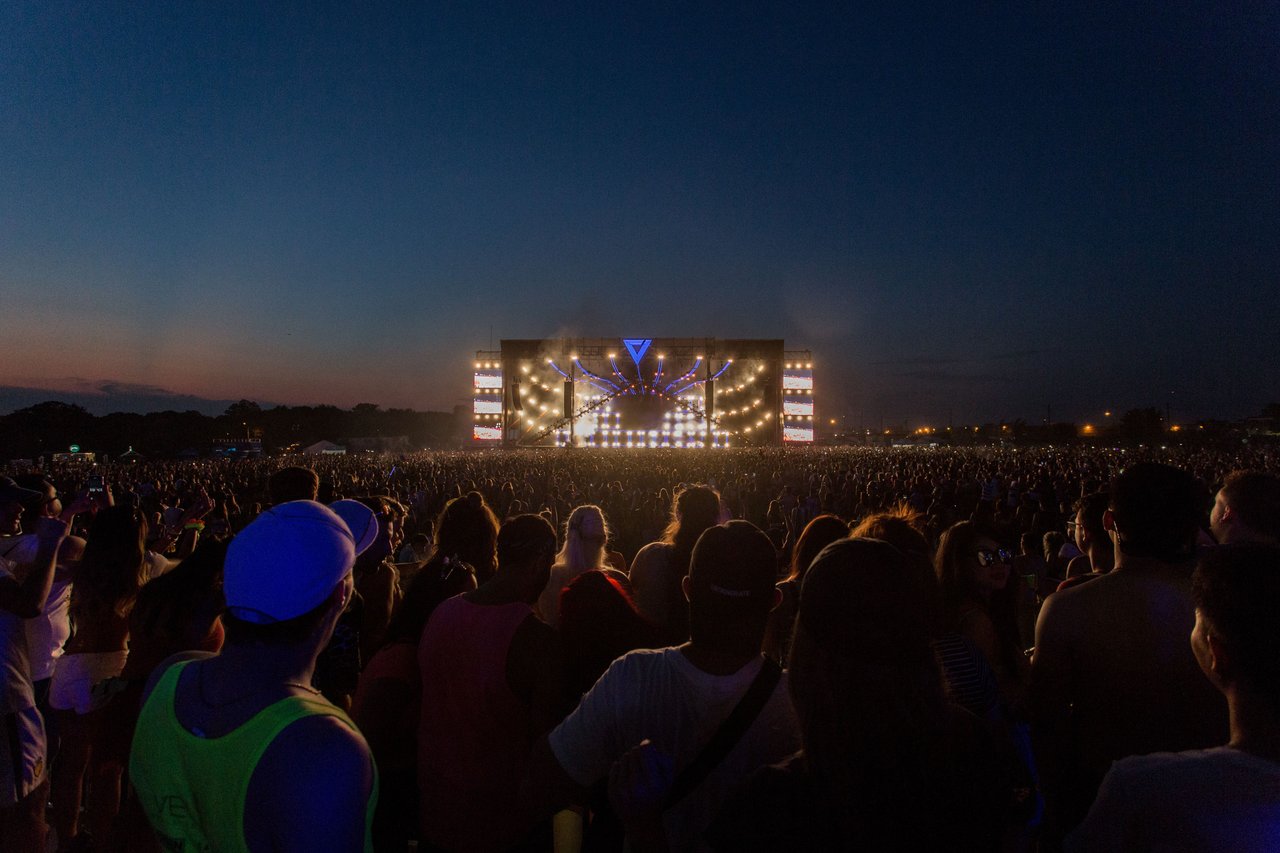
F1 at COTA is part of the full Austin experience — an event of global scale that happens 10 miles from downtown, in a city where October also includes ACL Music Festival. If you are considering Austin and want to understand what life here actually looks like, The Davis Agency is the right conversation to start.
The 2026 Race Weekend: What to Expect
The 2026 Formula 1 MSC Cruises United States Grand Prix runs October 23–25 at Circuit of the Americas. The format is standard for a modern F1 weekend: Friday practice sessions, Saturday qualifying that determines the starting grid, and the race on Sunday afternoon. Post-race entertainment — in 2026, a concert by Swedish DJ Alesso on the main stage — extends the event's appeal beyond the pure motorsport audience and reflects F1's approach to the US market: racing plus entertainment in a package that draws attendees who are interested in one, the other, or both.
Ticket options span General Admission grounds passes, grandstand seats at Turn 1, the Main Grandstand, Turn 4, and Turn 15, and premium hospitality experiences that put spectators in corporate suites with catering and guaranteed views. General Admission allows freedom of movement around the circuit; grandstand seating provides a fixed, protected view of one section of track.
The viewing experience from Turn 1 — where the uphill charge into the hairpin happens — is the most photographed and most kinetically dramatic position on the circuit. Turn 15, in the stadium section, provides the densest crowd atmosphere and the most accessible introduction to watching F1 cars at close range. The Main Grandstand gives the overview of the start-finish straight and the pit lane that broadcast coverage typically shows but the on-site experience makes genuinely different from any screen.
COTA Beyond F1: Year-Round Programming
The permanent circuit infrastructure at COTA supports a year-round events calendar that extends well beyond the Formula 1 weekend. NASCAR runs its Austin race annually in late February or early March — 2026 was its sixth consecutive year at COTA. MotoGP returned to COTA in late March 2026 for the Red Bull Grand Prix of the Americas. IndyCar, World Endurance Championship events, and various club racing programs fill additional calendar slots throughout the year.
COTA's amphitheater — a dedicated concert venue on the circuit grounds with capacity for major touring acts — hosts music events throughout the year that are unrelated to the racing calendar. The circuit has hosted Taylor Swift, Metallica, and other major touring artists in a venue context that provides large-capacity outdoor concert space that Austin's downtown venues cannot match.
The permanent infrastructure investment that COTA represents — $400 million in a purpose-built racing and entertainment facility — has produced a year-round events asset for Austin that no other facility in the city replicates. The economic impact is not confined to the three F1 race days; it is distributed across every event that COTA's calendar produces throughout the year.
The Contract Extension and What It Means
F1's United States Grand Prix will stay in Austin for the next nine years after a new contract was announced, keeping the race on the schedule until 2034. With this contract, COTA will overtake Watkins Glen as the longest-serving Formula 1 track in the United States.
The extension to 2034 represents a genuine institutional commitment — from Formula 1, from COTA, from the State of Texas, and from the City of Austin — to the race's position on the calendar. In a sport where calendar slots are actively competed for by cities and promoters globally, Austin's consistent renewal and eventual record-holding tenure reflects the race's performance: attendance, economic impact, fan satisfaction, and the specific Austin atmosphere that F1's leadership has identified as something worth protecting over the decades ahead.
F1 CEO Stefano Domenicali described Austin as "a city that has shown unwavering commitment to F1, with shared vision and investment that have played a vital role in establishing the strong foundation we now enjoy in the US."
What F1 at COTA Means for Austin's Global Identity
The United States Grand Prix at COTA is broadcast to hundreds of millions of viewers in more than 200 countries. Every October, those viewers see Austin: its skyline, its culture, its capacity to host a world-class event on its own terms rather than in imitation of somewhere else. The $10 billion in cumulative economic impact is significant. The global visibility is incalculable. Austin did not need Formula 1 to be a compelling city — but Formula 1 has made Austin a city that the world knows by name in a way that few American cities outside New York and Los Angeles can claim. That profile compounds over time in ways that show up in corporate relocation decisions, in talent attraction, and in the real estate market that reflects them.
Frequently Asked Questions
When exactly is the 2026 United States Grand Prix at COTA?
The 2026 Formula 1 MSC Cruises United States Grand Prix runs October 23–25 at Circuit of the Americas in Austin. Friday the 23rd is practice, Saturday the 24th is qualifying, and Sunday the 25th is race day. Post-race entertainment includes a concert by Alesso. Tickets are available at circuitoftheamericas.com, ranging from three-day General Admission grounds passes to grandstand seating to premium hospitality packages.
How do Austin residents typically handle F1 weekend — do they attend or leave town?
Both, depending on personal interest in motorsport. Serious F1 fans who live in Austin consider the race one of the major perks of their address — attending without the international travel that other calendar stops require. Residents who are less interested in the race often treat F1 weekend the way they treat SXSW: managing the hotel pricing, traffic, and downtown congestion by planning around it or briefly leaving. The city's hotels price F1 weekend at significant multiples of standard rates, which motivates some residents to visit family or take weekend trips they would not otherwise have planned. Both responses are common; neither is unusual.
How does COTA compare to attending F1 in Miami or Las Vegas?
The consensus among serious F1 fans who have attended all three US races is that COTA provides the most authentic racing atmosphere. The permanent circuit delivers closer views of the cars at higher speeds than the street circuits, the stadium section creates a genuine motorsport crowd atmosphere, and Austin's broader cultural context — the live music, the food scene, the October weather — produces a race weekend experience that extends well beyond the circuit itself. Miami and Las Vegas offer different things: Miami's production values and hospitality are exceptional; Las Vegas's setting is singular. Austin offers the race as its primary event, surrounded by a city that gives visitors genuine reasons to stay before and after the weekend.
Is COTA worth visiting outside of F1 weekend?
Yes — the circuit hosts events throughout the year, including NASCAR in late February/early March, MotoGP in March, and various other racing and entertainment events. The amphitheater venue hosts major concert acts throughout the year. The circuit itself offers karting and driving experience programs that allow visitors to lap the track outside of race weekends. For motorsport enthusiasts visiting Austin at any time of year, COTA is worth a visit even without a major event scheduled.
Related Reading from The Davis Agency
→ Austin's Annual Events Calendar: The Cultural Moments That Define Life in the City
→ ACL 2026: A Complete Guide to Austin's 25th Anniversary Music Festival
→ SXSW: What Austin's Most Important Week Actually Means for the City
→ The Austin Corporate Relocation Guide: What Luxury Buyers Moving from Coastal Cities Need to Know
→ Inside Zilker: A Neighborhood Character Guide for Luxury Buyers
Interested in a City Where October Looks Like This?
Formula 1 at COTA and ACL Music Festival in the same month, in a city that has earned both. If you are evaluating Austin as a place to live — or looking for a home in its most desirable neighborhoods — The Davis Agency is the right starting point.
Search Current Listings Call (512) 608-8811
Or email [email protected]. Derrik responds personally.
Derrik Davis · Broker/Owner, The Davis Agency · CLHMS Certified · TREC License #558841 · Serving Austin's luxury market since 2006.