Investor & Developer Guide · May 2026
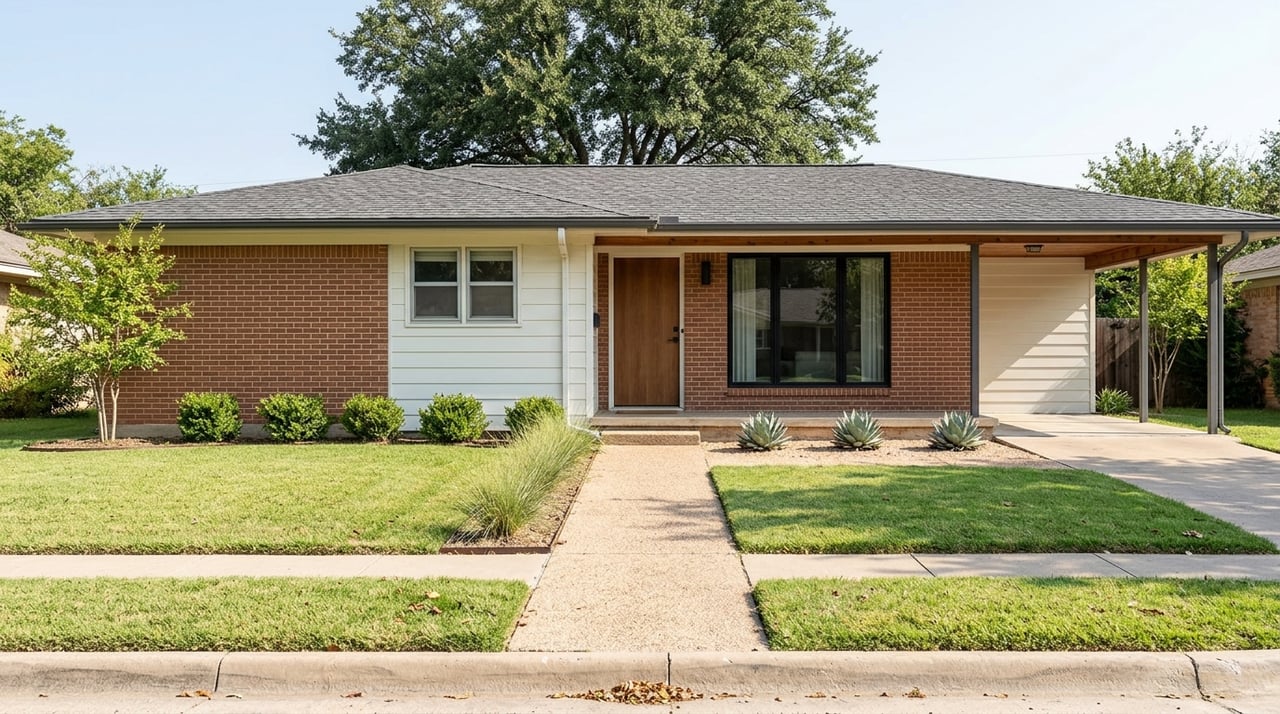
Drive through 78704 today and the transformation is visible at the street level — a 1960s ranch sitting between two new luxury builds, a vacant lot where a bungalow stood six months ago, a framing crew working on a 3,400 SF home three doors down from a 1,100 SF original. This is what infill development looks like on the ground, and it is reshaping South Austin one block at a time.
Get a Land Valuation Call (512) 608-8811
| $75–$95 Per SF Land Cost 78704 core, 2026 | $2M–$4M New Build Exit Prices Resetting comps across 78704 | 50+ New Permits Annually 78704 residential, estimated | ~0 Vacant Lots Available Teardowns are the only path to new product |
Infill development — the process of building new structures on underutilized or teardown parcels within an established urban neighborhood — is not new in Austin. What is new is the pace, the price point, and the degree to which it is concentrated in 78704. This zip code has become the most active infill market in Austin for reasons that are structural rather than cyclical: no vacant land, persistent demand, and new construction exit prices high enough to justify the cost of buying, demolishing, and rebuilding on lots that were never designed for this scale of product.
For homeowners, understanding where infill activity is happening and what it means for their block is increasingly important. For developers and investors, knowing which streets are generating the best returns and which are still ahead of the curve is the difference between well-timed acquisitions and late ones. This post covers both audiences — block-level detail on where the activity is and what it means for everyone it touches.
Why 78704 Became Ground Zero for Austin Infill
The conditions that make 78704 the most active infill submarket in Austin are not complicated. They are the product of geography, timing, and economics that have been compounding for more than a decade.
Supply is effectively exhausted. The zip code is surrounded by natural boundaries — Lady Bird Lake to the north, Barton Creek to the south and west, major arterials to the east — that prevent outward expansion. Every developable parcel that could be built on conventionally has been. The only path to new product is through the existing housing stock, which means teardowns.
Demand is structural, not speculative. The lifestyle amenities that define 78704 — Barton Springs, the Greenbelt, Lady Bird Lake, South Congress — are not replicable. Buyers who want that specific combination of urban proximity and natural access have no substitute market. That persistent, non-cyclical demand is what keeps builder acquisition prices high even when the broader Austin market softens.
New construction exit prices justify the math. A finished luxury home in Barton Hills at $2.5M–$4M generates enough margin — after land, demo, construction, and soft costs — to support builder acquisition prices in the $900K–$1.4M range for raw teardown lots. That gap is what funds the teardown cycle. As long as finished homes sell at current exit prices, builders will continue to acquire and develop.
The housing stock is aging into opportunity. The majority of 78704's existing residential stock was built between 1945 and 1975. Those homes are now 50–80 years old — at or past the point where maintenance costs and functional obsolescence make teardown economics more compelling than renovation for many owners. The aging stock creates a natural supply of teardown candidates that does not exist in newer neighborhoods.
Barton Hills: The Most Active Infill Submarket in 78704
Barton Hills has seen the highest concentration of infill activity in 78704 and carries the highest per-SF land values in the zip code. The combination of Greenbelt adjacency, elevation, and the prestige associated with the Barton Hills address drives builder demand that has not meaningfully softened even as the broader Austin market has cycled.
Where the activity is concentrated: The streets running east-west from Barton Hills Drive toward the Greenbelt — Oak Lane, Cedarview Drive, Oakhaven Drive, Rae Dell Avenue, and Foxglen Drive — have seen the most consistent teardown and new build activity over the past several years. These streets offer the combination of lot size, elevation, and proximity to Greenbelt access that boutique builders want for their highest-margin product.
What the new builds look like: Barton Hills new construction at the upper end of the market runs 3,200–4,500 SF on lots of 8,000–11,000 SF, with exterior programs in dark cedar, limestone, and stucco combinations that have become the visual language of 78704 luxury. Pool programs are standard. Outdoor living spaces that take advantage of elevation and canopy views are increasingly common. Finished homes in this tier are exiting consistently at $2.8M–$4.5M.
The comp reset effect: Every new build that closes at $3.2M+ on a block that was previously trading at $1.1M in older home sales resets the value ceiling for every adjacent property. This is the mechanism by which infill development raises values for homeowners who have no intention of selling — their property is now in a neighborhood with a fundamentally different comp set than it had five years ago.
The Barton Hills Acquisition Window
The streets where new construction has already delivered multiple comps are pricing land at or near full market — the opportunity has been recognized. The better acquisition targets are the adjacent streets where teardown activity is just beginning and land prices have not yet caught up to where the comp ceiling is heading. Knowing which blocks are one cycle behind is the most valuable intelligence in this submarket.
Zilker: High Velocity, Compressed Lot Sizes
Zilker has the second-highest concentration of infill activity in 78704 and arguably the deepest buyer pool for finished new construction. The proximity to Barton Springs Pool and Zilker Park — the most visited recreational amenity in Austin — creates a lifestyle premium that sustains demand even at the upper end of the price range.
Where the activity is concentrated: The blocks directly east and south of Zilker Park — particularly the streets running off of Barton Springs Road and the residential grid between Zilker Park and South Lamar — have seen the most consistent activity. Streets like Azie Morton Road, Lareina Drive, and the residential blocks of the original Zilker subdivision have all seen meaningful teardown and rebuild cycles over the past decade.
The lot size constraint: Zilker lots tend to run smaller than Barton Hills — 5,500–8,500 SF on average — which limits finished home footprints and caps the upper end of the price range relative to Barton Hills. The product that pencils best in Zilker is a 2,600–3,200 SF home with a tight but well-designed outdoor program. Builders who try to maximize square footage beyond what the lot and impervious cover limits support end up with homes that feel cramped and do not exit at the price points they underwrite.
The new build comp ceiling: Finished new construction in Zilker is currently exiting at $2.2M–$3.5M for the best-in-class product. Land is trading at $80–$92/SF, which means builder acquisition costs for a standard Zilker lot run $800K–$1.1M before demo and construction. The margin is tighter than Barton Hills, which has pushed some builders toward larger Barton Hills lots — but Zilker's buyer pool remains deep and the exit timeline for finished product is typically shorter.
Travis Heights: The Emerging Infill Frontier
Travis Heights has historically traded at a discount to Barton Hills and Zilker on a per-SF basis, but infill activity here has accelerated meaningfully as builders who have been priced out of the most active Barton Hills blocks look for the next tier of opportunity. The neighborhood's proximity to South Congress, Lady Bird Lake, and its own residential character are drawing a growing number of boutique builders and developer-buyers.
Where the activity is concentrated: The elevated northern blocks of Travis Heights — those closest to Lady Bird Lake with partial skyline views — have seen the most aggressive new construction activity. Streets like East Live Oak Street, Wentworth Street, and the upper blocks of Alameda Drive have all seen teardown activity accelerate over the past 24 months. South Congress-adjacent blocks in the western portion of the neighborhood have also drawn builder attention, particularly for smaller-footprint urban luxury product.
What the opportunity looks like: Travis Heights land is currently pricing at $72–$85/SF — a meaningful discount to Barton Hills and Zilker — while finished new construction exits at $1.8M–$2.8M for well-positioned product. For builders who can find the right lot in the right block position, the margin profile is actually stronger in Travis Heights than the raw land price suggests, because the discount to adjacent neighborhoods has not fully corrected to reflect the lifestyle proximity.
The flood zone consideration: A meaningful portion of Travis Heights falls within FEMA-designated flood zones — particularly the lower-elevation blocks near creek drainages. Developers evaluating Travis Heights acquisitions must pull flood map data as a first step — a flood zone designation affects construction requirements, insurance costs, and financing, and in some cases eliminates the development opportunity entirely on what would otherwise be an attractive lot.
Bouldin Creek: Urban Density, Smaller Deals
Bouldin Creek's infill market looks different from the other three neighborhoods in 78704 because the product it can support is structurally different. Smaller lot sizes, tighter impervious cover constraints, and lower land values per SF mean that the teardown-to-luxury-build cycle that drives Barton Hills and Zilker is less prevalent here. What Bouldin Creek does have is strong demand for well-designed urban infill at a lower total price point — typically $1.4M–$3.2M — and a growing pool of buyers who specifically want the South Congress walkability that this neighborhood delivers.
Where the activity is concentrated: South Congress-adjacent blocks in the western portion of Bouldin and the streets running east from South First Street have seen the most consistent new construction activity. These blocks attract buyers who want to walk to South Congress and South First Street daily — a lifestyle driver that sustains demand even for smaller footprints on constrained lots.
The ADU opportunity: Bouldin Creek is one of the 78704 neighborhoods where accessory dwelling units — garage apartments and detached studios are most economically viable. The combination of lot sizes that can accommodate an ADU, proximity to the University of Texas and downtown employment, and strong rental demand from South Congress visitors makes Bouldin Creek ADU development a separate investment thesis from the teardown-to-new-build model that dominates Barton Hills.
Evaluating an infill opportunity in 78704?
The Davis Agency tracks the 78704 development pipeline street by street and maintains direct relationships with the builders and developers active in this submarket. Whether you are evaluating an acquisition or trying to understand what is happening on your block, the conversation starts here.
Get a Property Valuation →How New Builds Reset Comps: The Block-Level Math
Understanding how infill development affects property values requires understanding how appraisers and buyers use comparable sales data — and how that data shifts when the neighborhood's product mix changes.
In a traditional neighborhood, comparable sales are drawn from similar homes — roughly similar age, condition, and size — within a defined radius of the subject property. When a new luxury build closes at $3.2M on a block where the previous sales were $1.1M–$1.4M older homes, appraisers and buyers face a methodological challenge: the new build is not directly comparable to the existing stock, but it is on the same block and it reflects what the market is willing to pay for that location.
The mechanism by which new build comps affect older home values operates on two tracks. First, the land value component: every transaction — new build or resale — that occurs in the neighborhood provides evidence of what the underlying land is worth. As new builds establish that 78704 lots support $2.5M+ exits, the land value embedded in every older home on the same block rises, even if the structure above it has not changed. Second, the neighborhood quality signal: concentrations of high-quality new construction attract higher-income buyers to the neighborhood, which deepens the buyer pool for all properties and supports values across the board.
The Regulatory Landscape: What Shapes Infill in 78704
Infill development in 78704 does not happen in a regulatory vacuum. Three specific regulatory frameworks shape what can be built, where it can be built, and how much it costs to build it — and understanding them is essential for developers, investors, and homeowners evaluating their options.
Impervious cover limits. The City of Austin caps the percentage of a lot that can be covered by hard surfaces — structures, driveways, patios, walkways — at 45% in most residential zones. In 78704, some parcels fall within watershed protection overlay zones that tighten this limit to 40% or lower. Impervious cover limits directly cap total buildable area and outdoor hard surface scope, and they are a primary constraint on how large a finished home can be on any given lot.
Heritage tree preservation. Austin's Urban Forestry ordinance protects trees with trunks of 19 inches or greater in diameter. In 78704 — where the tree canopy is one of the neighborhood's defining characteristics — heritage trees are pervasive and the preservation requirements around them are real. Builders must submit tree surveys and protection plans as part of the permitting process, and the cost of working around or preserving a significant heritage tree can add $20,000–$80,000 to a project budget. Acquiring a lot without a thorough tree survey is one of the most common and expensive mistakes in 78704 development.
Compatibility standards. Austin's compatibility standards regulate building height and setbacks relative to adjacent properties in certain contexts. In 78704 neighborhoods where compatibility applies, a new build that is adjacent to a single-family home must step down in height as it approaches the shared property line. This affects roof design, upper-floor massing, and in some cases total square footage — and it is a variable that experienced 78704 builders account for in their design process but that first-time developers often underestimate.
What This Means for 78704 Homeowners
If you own an older home in 78704 and new construction has appeared on your block in the past two years, your property's value to a developer has likely increased materially — regardless of whether your home itself has changed. The comp reset effect is real and it works in your favor even if you have no intention of selling. If you are curious what your lot is worth to a builder in the current market, that is a conversation worth having before you make any decisions.
Frequently Asked Questions
How do I find out if my 78704 property is in an active infill zone?
Pull your address in the City of Austin's permit portal and look at what has been permitted within a half-mile radius in the past 24 months. New residential construction permits in your immediate area are the clearest signal that your block is in an active infill cycle. Your agent can also pull this data and contextualize it relative to recent land sales in your specific block — which is a more useful analysis than the raw permit count alone.
Does infill development hurt the character of 78704 neighborhoods?
This is a genuinely contested question and reasonable people disagree on it. What is objectively true is that infill development raises land values and the quality of the physical housing stock in 78704 — both of which benefit existing homeowners financially. What is also true is that the character of a neighborhood changes as its housing stock turns over. The original bungalow and ranch-style fabric of 78704 is gradually being replaced by larger, newer homes — a transformation that some residents welcome and others mourn. The Davis Agency's role is not to adjudicate that debate but to help our clients navigate the market it creates.
Is 78704 infill development slowing down?
Not materially. Builder demand for well-positioned 78704 lots remains strong because the underlying fundamentals — supply exhaustion, persistent lifestyle demand, and viable exit pricing — have not changed. What has moderated is the pace of finished home sales at the very top of the price range, which has caused some builders to be more selective about acquisition pricing. Well-positioned lots at realistic prices continue to trade quickly. The market is more disciplined than it was in 2021–2022 but it is not slow.
What is the difference between infill development and traditional residential development?
Traditional residential development builds on previously undeveloped land — raw land subdivided into lots and built out with new homes. Infill development builds on parcels within an already-developed urban neighborhood, typically by demolishing an existing structure and replacing it with new construction. In 78704, infill is the only development model available because there is no undeveloped land left. Every new home in this zip code is an infill project by definition.
Can I build an ADU on my 78704 property instead of selling?
Possibly — it depends on your lot size, impervious cover availability, and specific zoning. Austin's relaxation of ADU regulations in recent years has made this more viable across the city, and 78704 lots that have available impervious cover can often support a detached garage apartment or backyard cottage. This is a legitimate alternative to selling for homeowners who want to generate value from their lot without vacating it. A site-specific analysis — which we can walk through — will tell you quickly whether the numbers make sense on your specific property.
Related Reading from The Davis Agency
→ The 78704 Land Value Report: What Infill Lots Are Actually Worth in 2026
→ Why Developers Pay a Premium for 78704 Teardowns — And What Sellers Need to Know
→ What Does It Actually Cost to Build a Custom Luxury Home in 78704 in 2026?
→ Luxury New Construction in Barton Hills: A Buyer's Guide from Lot to Keys
→ The Off-Market Advantage: How The Davis Agency Closes Deals Before They Hit MLS
Find Out What Infill Activity Means for Your Property
Whether you are a homeowner trying to understand what is happening on your block, a developer evaluating an acquisition, or an investor looking for the next infill opportunity in 78704 — the conversation starts with a call. The Davis Agency tracks this market street by street and we are happy to share what we are seeing.
Request a Land Valuation Call (512) 608-8811
Or email [email protected]. Derrik responds personally.
Derrik Davis · Broker/Owner, The Davis Agency · CLHMS Certified · TREC License #558841 · Serving 78704 and the greater Austin luxury market since 2006.