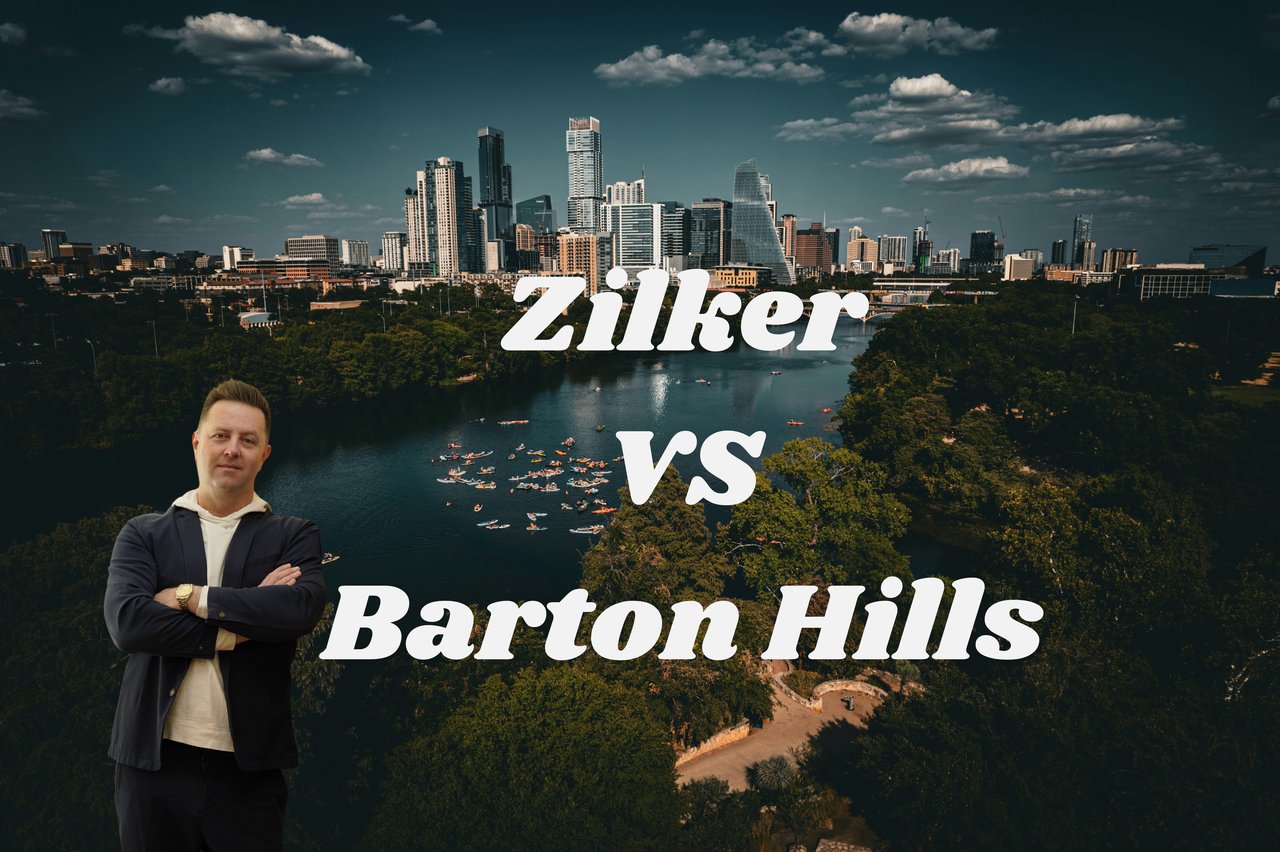
Zilker vs. Barton Hills: Which One Actually Fits You
Neighborhood Guide · August 2026
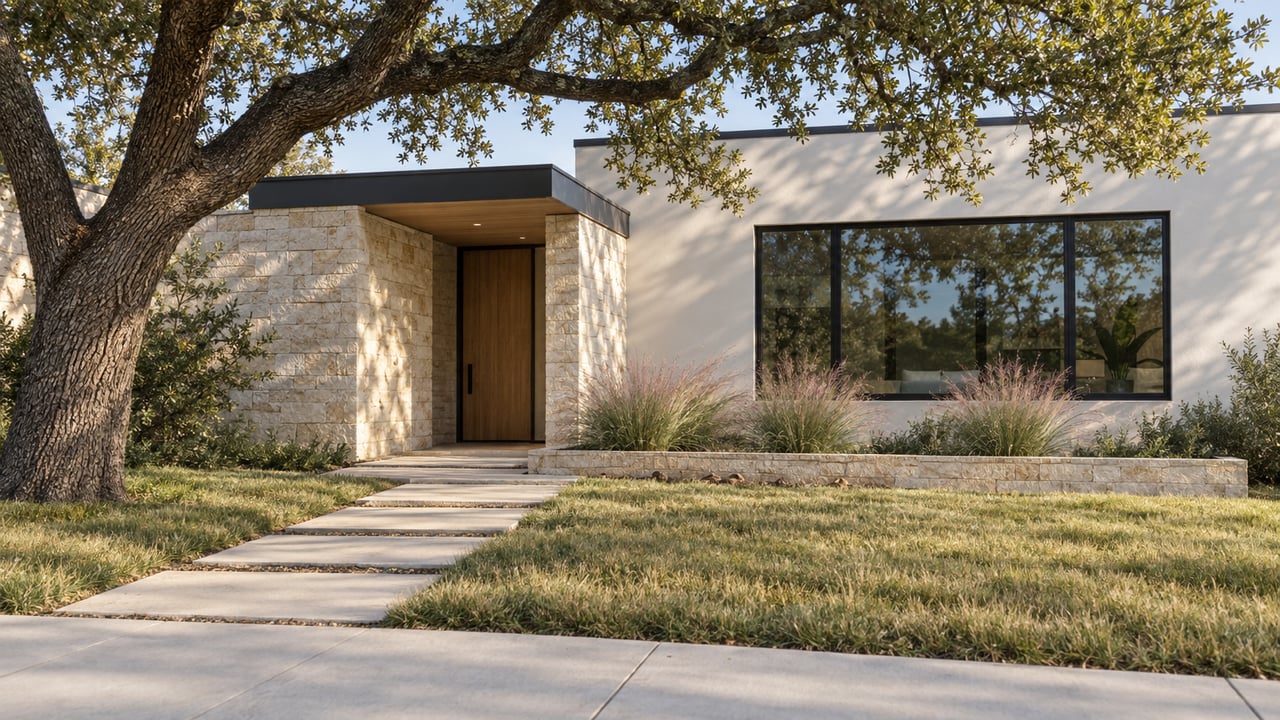
The short answer: at the same price, Zilker buys you walkability and Barton Hills buys you land. Both are 78704, both are minutes from downtown, both have northern tips reaching into Zilker Park, and both share a school district. Zilker new construction runs $2.5 to $4 million; Barton Hills generally tops out around $5 million, with a handful of exceptional homes trading between $7 and $8 million. The real difference is the lot — Barton Hills runs 0.22 to 0.41 acres with slope and heavy oak canopy, Zilker runs noticeably smaller and flatter with restaurants inside a walk.
These two get compared constantly and described interchangeably, usually by people who haven't spent a weekend in either. They're adjacent, they share a ZIP code and a school district, and they attract buyers at the same price point. They also produce completely different daily lives. Here's the comparison as a buyer should run it.
Tour Both With UsCall (512) 608-8811
78704 Same ZIP Code Same school district, too | ~2x Lot Size Difference Roughly, on typical parcels | $4–5M Where Each Tops Out Zilker nearer $4M, Barton Hills nearer $5M | BOTH Touch Zilker Park Northern tips of each reach the park |
Side by Side
Factor | Zilker | Barton Hills |
|---|---|---|
Typical lot | Smaller and flatter. New builds designed tight against cover and FAR limits. | 0.22 to 0.41 acres, with real elevation change and heavy oak canopy. |
Land basis | $800,000 to $1 million | $900,000 to $1.4 million |
New construction | $2.5 to $4 million | Generally topping out near $5 million, with rare exceptional homes at $7 to $8 million |
Walk to dinner | Yes, genuinely — Barton Springs Road and South Lamar | Mostly a short drive. A few streets are walkable to Barton Springs Road. |
Green space | Zilker Park, Barton Springs Pool, greenbelt trailheads, the lake trail | Greenbelt access from the neighborhood, a northern edge on Zilker Park, plus canopy on your own lot |
Noise and traffic | Busier. Park events, festival season, visitor traffic on Barton Springs Road. | Quieter overall, with little through traffic — though northern streets near the park see event pressure. |
Housing stock | 1960s and 70s originals around 1,200 SF, renovated older homes, and modern infill | Mid-century ranches, substantial remodels, and larger custom new builds |
Schools | Austin ISD — Zilker Elementary in the neighborhood | Austin ISD — Barton Hills Elementary in the neighborhood |
Ranges reflect current market estimates for well-positioned property. Individual lots vary substantially by street, slope, width and tree coverage. School attendance boundaries are set by the district and subject to change — confirm zoning for any specific address.
The Price Ceiling Isn't the Difference Anymore
It used to be reasonable to describe Barton Hills as the step up from Zilker. That framing is only half right now. Well-executed Zilker new construction reaches into $4 million, which puts the two neighborhoods on top of each other across most of their range. Where they separate is at the very top: Barton Hills generally tops out near $5 million, and a small number of genuinely exceptional properties — the large greenbelt-backing lots, mostly — have traded between $7 and $8 million. Zilker has no equivalent tier, because it doesn't have the land to support one.
What that means for a buyer is genuinely useful: you are not choosing between a more expensive neighborhood and a cheaper one. At $3 million you have real options in both, and the decision is about what the money is buying rather than how much of it you're spending.
In Zilker, $3 million tends to buy a newer, more efficiently designed house on a modest lot with a genuinely walkable front door. In Barton Hills, the same figure tends to buy more land, more tree canopy and more quiet, with the trade being that you'll drive to most things.
The question that settles it faster than any spreadsheet: picture a Saturday morning. If you're walking to coffee, then to the pool, then meeting people for lunch without moving the car — that's Zilker. If you're having coffee on a deck under oaks with nobody in sight, then driving to wherever you're going — that's Barton Hills. Most buyers know which one they just pictured.
What a Week Actually Looks Like
In Zilker, the park is an extension of your house. People swim at Barton Springs before work with a regularity that surprises newcomers. Dinner on Barton Springs Road happens on foot. The lake trail connects you to downtown without a car. The flip side is that you share all of it — the park draws the whole city, parking on the surrounding streets tightens on nice weekends, and Barton Springs Road carries visitor traffic that has nothing to do with the neighborhood.
In Barton Hills, the street is quiet in a way that central Austin mostly isn't. Elevation change and mature canopy mean the houses sit apart from each other and you're not looking into a neighbor's kitchen. Greenbelt access is from the neighborhood rather than through a crowded park. But you'll drive to dinner, you'll drive to the grocery store, and the spontaneous walk-out-the-door quality of Zilker isn't there.
Neither of those is better. They suit different households, and plenty of people who thought they wanted one discover on the second showing that they wanted the other.
Families, Specifically
Both neighborhoods are served by Austin ISD, and each has an elementary school inside it — Zilker Elementary and Barton Hills Elementary. Both feed into the same general path through middle and high school, though boundaries are the district's to set and worth confirming for a specific address rather than assuming from the street.
Where families tend to split is on the yard. Barton Hills lots support the things a yard is for — a trampoline, a real play structure, a dog with room to run, a pool that doesn't consume the entire outdoor space. Zilker lots are tighter, and families here tend to treat the park as the backyard. That works genuinely well for some households and not at all for others, and it's worth being honest with yourself about which you are before you fall in love with a house.
The other consideration is the bridge. Families weighing either neighborhood against Eanes ISD are running a different comparison entirely, and that decision usually gets made before the Zilker-versus-Barton-Hills one.
Want to see both in one afternoon?
This is a comparison that resolves itself quickly once you've stood on a few streets in each. The Davis Agency has worked Zilker and Barton Hills since 2006 and can put together a tour that answers the question rather than just showing you houses.
The October Factor
ACL runs two weekends at Zilker Park every October — this year October 2–4 and 9–11, at roughly 75,000 people a day. Counting build-out, the week between weekends and post-festival restoration, the great lawn is effectively occupied for closer to a month. A 2025 agreement with the City extends the arrangement through 2040, so it's a permanent feature rather than an open question.
One correction to the way this usually gets described: Barton Hills is not outside the festival footprint. The northern tips of both neighborhoods reach into Zilker Park, so both experience the traffic, the parking pressure and the access restrictions — the difference is one of degree and of which streets you're on, not of whether it touches you at all. A house on the northern edge of Barton Hills may feel October more sharply than one on a southern Zilker street. Ask about the specific block rather than the neighborhood name.
For most buyers this is a footnote. For a small but real slice — people who work from home in a front room, families with young kids on a tight nap schedule, anyone whose tolerance for crowds is low — it's the deciding factor. And for another slice it's a genuine selling point, because walking to a festival other people fly in for is not nothing. Just make sure you know which slice you're in before October rather than after.
If You're Building or Renovating
Both neighborhoods sit under the same two limits — impervious cover capped at 45 percent of the lot, floor-to-area ratio capped at 40 percent — but they hit differently.
In Zilker, the smaller lot means those percentages bind fast, which is why new construction here is compact, vertical and frequently designed around attic and basement exemptions and a carport rather than a garage. In Barton Hills, larger lots give the percentages more room, but slope and heritage trees take over as the governing constraints — stepped foundations, retaining structures, and critical root zones that dictate where the house can physically sit.
The cost consequence: Barton Hills construction runs meaningfully higher per square foot than Zilker's, driven by topography, tree protection and the specification level the neighborhood's pricing supports. If you're comparing a build in each, that gap belongs in the comparison from the start.
Frequently Asked Questions
Is Barton Hills more expensive than Zilker?
Land is — Barton Hills runs $900,000 to $1.4 million against Zilker's $800,000 to $1 million — and Barton Hills has the higher ceiling, generally topping out near $5 million with a handful of exceptional properties trading at $7 to $8 million. But the ranges overlap heavily below that. Zilker new construction reaches $4 million, so at most price points you'll find real options in both, and the decision is about what the money buys rather than how much you're spending.
Which is better for families, Zilker or Barton Hills?
Both are served by Austin ISD and each has an elementary school within the neighborhood. Barton Hills lots are larger and better suited to households that want a real yard, a play structure or a dog with room to run. Zilker families tend to use the park as the backyard, which suits some households well and others not at all. Families weighing either against Eanes ISD are running a separate comparison across the bridge.
Can you walk to restaurants from Barton Hills?
From some streets, yes — the parts of the neighborhood closest to Barton Springs Road have reasonable walking access. From most of it, dinner is a short drive. Zilker is meaningfully more walkable overall, with Barton Springs Road and South Lamar both reachable on foot from much of the neighborhood.
Does ACL affect Barton Hills?
Yes. The northern tips of both Barton Hills and Zilker reach into Zilker Park, so both neighborhoods experience festival traffic, parking pressure and access restrictions. The effect is generally more concentrated on the Zilker side and on streets closest to the park entrances, but Barton Hills is not outside the footprint. How much any specific home is affected depends far more on the block than on the neighborhood name.
Related Reading from The Davis Agency
→ Moving to Zilker: The Complete Guide
→ Who's Actually Building in Barton Hills Right Now
→ What a Zilker Lot Actually Supports: Cover, FAR, and the Trees
→ ACL Weekend as a Zilker Homeowner: The Two-Weekend Reality
Still Deciding?
Most buyers settle this in an afternoon of walking both neighborhoods with someone who can tell them which streets are quiet, which back onto the greenbelt, and which are walkable to what. The Davis Agency has worked central Austin block by block since 2006.
Start the ConversationCall (512) 608-8811
Derrik Davis · Broker/Owner, The Davis Agency · CLHMS Certified · TREC License #558841 · Serving 78704 and the greater Austin luxury market since 2006. School attendance zones, event schedules and market figures are subject to change — confirm current details for any specific property before making a decision.