Austin Lifestyle · June 2026
Austin calls itself the Live Music Capital of the World. Cities that call themselves things are usually wrong, or at least only partially right. Nashville calls itself Music City. Memphis has Beale Street. New Orleans has the French Quarter. Every city with a guitar on a wall somewhere has figured out how to work it into tourism language. The difference with Austin is that the claim is specific, verifiable, and grounded in something that cannot be manufactured: a culture of original live music that exists because Austinites show up for it every night, whether or not anyone is visiting.
Talk to The Davis AgencySearch Austin Listings
250+ Live Music Venues More per capita than any other US city | $2.3B RRCD Economic Impact Red River Cultural District — 5-year total | 1976 Austin City Limits Debut Longest-running music TV show in American history | $7.14M City Music Grants FY26 Austin Live Music Fund — venues, musicians, promoters |
The claim was made official in 1991, when the City of Austin formally adopted "Live Music Capital of the World" as a designation backed by a statistic that was verifiable at the time and has remained verifiable since: more live music venues per capita than any other American city. The City of Austin backs that claim with direct financial investment: the Austin Live Music Fund, administered by Austin Arts, Culture, Music and Entertainment, distributed $7.14 million in FY26 to support venues, musicians, and independent promoters. That level of municipal commitment to a single creative sector is rare among U.S. cities.
The number that matters is not $7.14 million, significant as it is. The number that matters is 250 — the approximate count of venues where live music can be heard on any given night in Austin. It hosts more live music venues per capita than anywhere else in the United States, boasting over 250 venues where live music can be enjoyed any day of the week. That density, and the culture that produced it, is what the title is actually describing. The venues are not a marketing apparatus. They are a genuine infrastructure that exists because there are musicians who want to play in Austin and audiences who want to hear them.
The Specific Claim Worth Defending
Nashville has a larger music industry by revenue. Nashville's music industry approaches $5.5 billion, whereas Austin's industry is closer to $1.8 billion. If the title "Live Music Capital" meant the city with the largest music business, Nashville would win. But that is a different title than the one Austin holds.
Nashville's music industry is a production industry: recording studios, publishing houses, label offices, management companies. The music is Nashville's product, manufactured and exported. The live music scene that exists in Nashville's bars and honky-tonks is largely a tourist-facing performance of Nashville's music identity rather than an organic local culture. The musicians performing on Lower Broadway most nights are performing for visitors, because that is what the economic model of Lower Broadway requires.
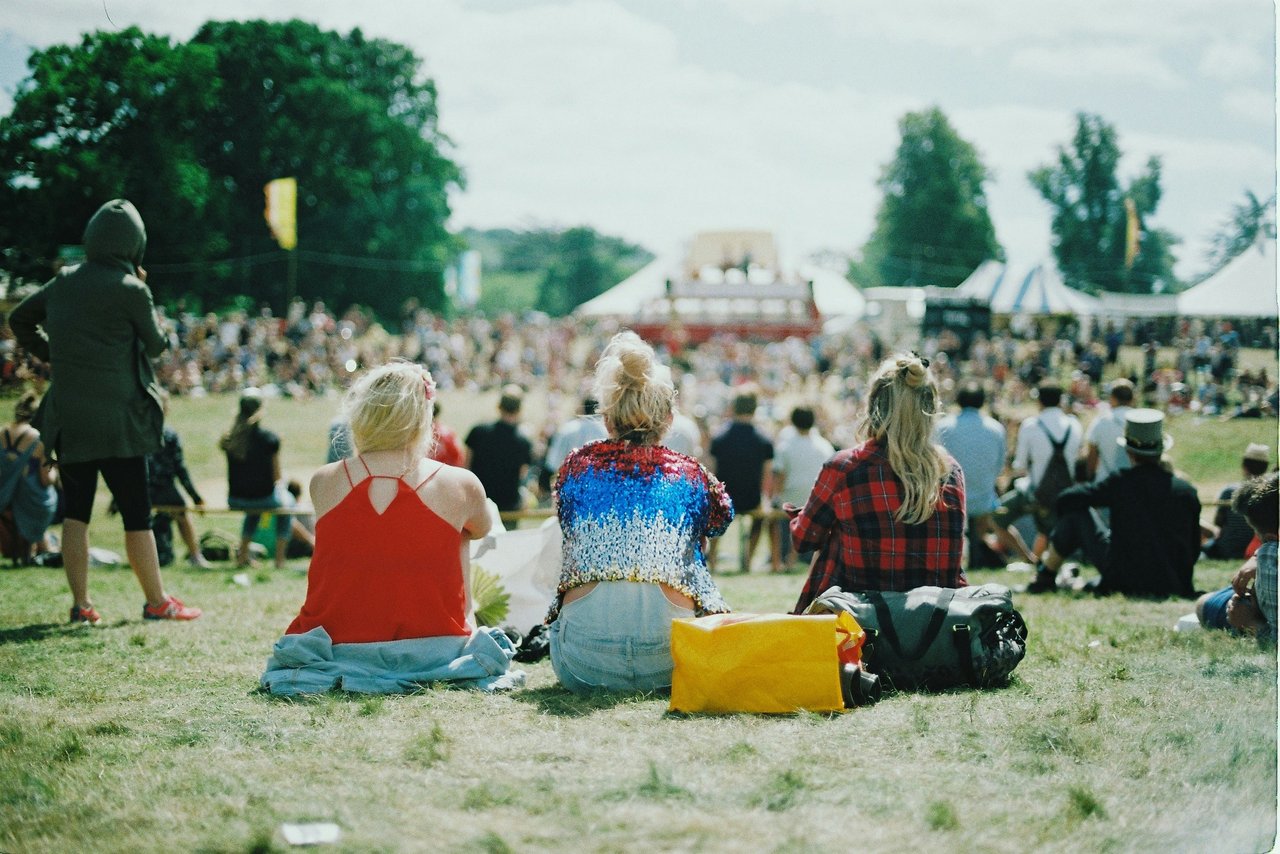
Austin's model is different at the level of who the audience is. In Austin, music isn't background noise — it's infrastructure. It hums beneath conversations, spills out of open doorways, and drifts across patios long after sunset. The clubs in the Red River Cultural District, the venues on East Sixth Street, the neighborhood bars in Bouldin Creek and South Congress and North Loop — these program live original music seven nights a week because Austin residents show up for it. Not tourists, primarily. Austinites. People who live here and choose to spend a Wednesday night watching an original band in a room with sixty other people who are there for the same reason.
That is what Austin means when it says Live Music Capital. Not the largest industry. Not the most famous artists. The densest, most authentic, most locally-rooted culture of original live music in the United States — a culture that exists because the city's residents have demanded it for long enough that it has become structural.
The Red River Cultural District: Where Austin's Music Heartbeat Accelerates
If you want to understand Austin's music identity in a single geography, walk Red River Street between Sixth and Twelfth streets on a Thursday night. Located along Red River Street between 6th and 12th streets, the Red River Cultural District is a collection of music venues, restaurants, local dive bars, and other hospitality businesses that are key to maintaining Austin's reputation as the live music capital of the world.
The Red River Cultural District is managed by the Red River Merchants' Association, a coalition of over forty local small businesses — including not only live music venues but also the Austin Symphony Orchestra and Waterloo Greenway among its 501(c)(3) nonprofit membership. The nonprofit structure is significant: the RRCD is not a landlord-managed commercial district optimizing for retail rents. It is a community organization that has deliberately chosen to preserve the independent music venue character of a stretch of road that has been incubating Austin talent since before anyone called Austin anything.
In the past five years, the RRCD has generated more than $2.3 billion in total economic impact, including $23 million in local taxes and nearly $174 million in local labor income. It supported 3,715 full-time equivalent jobs around the Austin area, more than 650 musicians, and more than 18 venues. Those numbers are produced by a cluster of independent clubs, most of which hold fewer than 500 people, most of which charge no cover on weeknights, and most of which have been operating in some form for decades rather than months.
The specific venues that anchor the Red River district include Stubb's Amphitheater — an outdoor amphitheater that holds 3,000 people and has hosted virtually every significant touring act of the past three decades in an outdoor Texas setting that makes even familiar artists feel different. Mohawk, with its indoor and outdoor stages and its positioning as the venue where the transition between emerging and established happens most visibly in Austin. Antone's, the blues club that was Stevie Ray Vaughan's home stage and that continues to program the blues and Americana tradition that gives the Red River district its deepest roots.
The Most Important Thing the RRCD Does
The Red River Cultural District's most important economic function is not the $2.3 billion in impact. It is paying Austin musicians. The RRCD has supported more than 650 musicians through its five-year economic impact period. In a country where musician pay has been compressed by streaming, by the consolidation of concert promotion, and by the rising cost of living in creative cities, Austin's Red River district pays local artists to perform for local audiences at a density and frequency that is genuinely unusual. The fact that a musician can live in Austin, perform in Austin, and build an audience in Austin without needing to be signed or famous first is what makes Austin different. That is the culture that produces everything else.
The Continental Club and Austin's Musical DNA
The Continental Club on South Congress Avenue opened in 1955. It is not the oldest venue in Austin, but it is the one that most clearly expresses what Austin's music culture is and where it came from. A mid-century building on a block that has become one of Austin's most famous streets, the Continental holds about 200 people, has never hosted an artist who needed a larger room, and has been the stage where Austin's music character has been most continuously expressed for seventy years.
The Continental is where the honky-tonk and the blues and the country and the rock and roll that Austin has always blended into something that resists clean genre categories have been practiced and refined for longer than any living Austin musician has been performing. It is a club that exists because Austin has always been a city where this kind of music, in this kind of room, for this kind of audience, has been the natural expression of a specific cultural character rather than a calculated entertainment offering.
The performers who have stood on the Continental's stage represent a significant portion of the artists who have shaped American popular music since 1955. The performers who will stand on it next weekend are, for the most part, unknown. That combination — a venue where the history is real and the present is unresolved — is what makes it specifically Austin rather than specifically anywhere else.
Willie Nelson and the Day Austin Found Its Identity
Austin's music identity was crystallized in the early 1970s when Willie Nelson moved from Nashville to a ranch outside Austin and began performing at a club called the Armadillo World Headquarters. Nelson, dissatisfied with what Nashville's music industry was asking him to be, found in Austin an audience that was willing to hear something that did not fit any existing category cleanly: country music performed for college students and hippies and rednecks simultaneously, in a converted armadillo-themed venue that seated 1,500 and felt like nothing that existed in the American music landscape.
The Armadillo World Headquarters is gone. Willie Nelson is still in Austin. The thing that Nelson found here — the specific willingness of Austin's audience to receive music on its own terms rather than on the terms of any existing genre or industry category — is still the essential characteristic of the city's music culture. The musicians who have come to Austin since 1973 have come, in part, because Austin is a city that does not require them to be anything except themselves at a level of skill sufficient to hold a room. The audiences who fill Austin's 250 venues came for the same reason: to hear what that produces.
Stevie Ray Vaughan: The Artist Austin Made
Stevie Ray Vaughan was born in Dallas. He came to Austin as a teenager, found his way to the clubs of the Sixth Street area and eventually to Antone's on Red River Street, and in the specific environment of Austin's 1970s and 1980s blues club scene — where the audience expected craft and the club owners booked for the music rather than for the marketing — became one of the most significant guitarists in the history of American music.
The bronze statue of Vaughan that stands on the shores of Lady Bird Lake near the hike-and-bike trail is Austin's most publicly visible musical monument. It is not there as a tourist attraction, though tourists photograph it. It is there because Austin understands that Stevie Ray Vaughan was made possible by something specific about this city — by the clubs that gave him stages before he was famous, by the audiences that kept showing up, by the culture that valued the music enough to pay for it even when the musician playing it was not yet a name. The statue is less a monument to a specific musician than to the culture that produced him.
Austin City Limits: How the World Found Out
Austin City Limits, the television show that premiered on PBS in 1976, is the longest-running music television series in American history. It predates the Austin City Limits Music Festival by 26 years. It predates SXSW by eleven years. It is, in the most direct sense, the first sustained national argument that Austin's music culture was worth paying attention to.
The show — filmed at what is now Austin City Limits Live at the Moody Center — has presented virtually every significant American musician across five decades of programming. Its consistent presence on public television gave Austin's music culture a national visibility that no other mechanism would have provided in the pre-internet era and that compounds in cultural significance with every additional decade the show runs. The tourist who arrives in Austin having watched Austin City Limits for twenty years is arriving in the city that made those performances possible — and finding that the same culture that produced what they watched on television is still operating in the clubs every night.
The neighborhood you choose in Austin determines how directly you live inside this
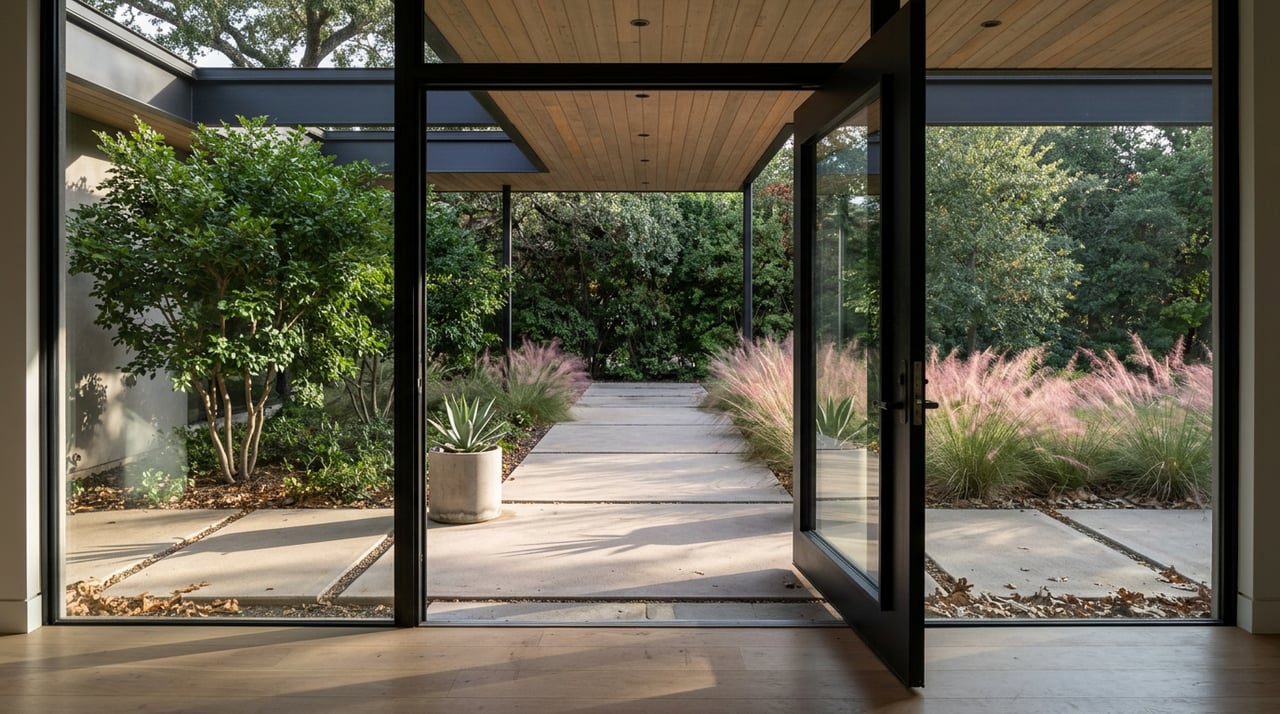
The addresses in 78704 — Barton Hills, Bouldin Creek, Travis Heights, Zilker — are the ones where the Continental Club is walkable, where the Red River District is a short drive, where the daily experience of living in Austin most directly includes the thing that makes Austin what it is. The Davis Agency knows these neighborhoods as well as anyone in Austin luxury real estate. The conversation starts here.
The Specific Thing Austin Does That No Other City Does
Here is the specific thing: you can see original live music in Austin on a Monday night in February, at a neighborhood bar, with no cover charge, performed by a band playing songs they wrote.
Not cover songs. Not a DJ set. Not a performer interpreting someone else's music. Original songs, written by Austin musicians, performed for an Austin audience that showed up on a Monday in February because this is what they do on Monday nights in February.
That specific thing is not available at that density in any other American city. Not Nashville, where Monday nights are for the tourists on Lower Broadway hearing cover songs. Not New York or Los Angeles, where the venue economics require that the performers be either famous enough to draw paying audiences or willing to pay a venue for the privilege of performing. Not New Orleans, where the French Quarter music scene exists primarily for visitors rather than for locals.
The culture that makes Monday-in-February original music possible in Austin is not an accident and it is not the product of marketing. It is the result of seventy years of a specific kind of artist being drawn to a specific kind of city, finding there an audience willing to show up for the music rather than for the spectacle, and creating a self-reinforcing ecosystem of venues and musicians and audiences that has become structural. The 250 venues are the infrastructure. The musicians who fill them and the audiences who attend are the culture that made the infrastructure necessary.
How Austin Invests in the Infrastructure
The City of Austin's financial commitment to its music culture is not symbolic. The Austin Live Music Fund distributed $7.14 million in FY26 to support venues, musicians, and independent promoters. Specifically, venues can receive grants of up to $70,000, while individual musicians and promoters can receive up to $20,000.
The grant program is a recognition of something that Austin's civic leadership understands clearly: the music venues and working musicians who constitute the city's live music infrastructure are not a luxury amenity that can be replaced if economic pressures force them out. They are the thing itself — the actual material from which Austin's identity, its tourism economy, its ability to attract residents and companies and cultural events is made. A city that loses its independent music venues to rising rents and declining music revenue does not simply lose some entertainment options. It loses the thing that makes it Austin.
The $7.14 million is a small fraction of what would be required to make the music ecosystem financially stable in a city where real estate costs have risen significantly. It represents a commitment and a direction rather than a solution. But the direction matters: Austin is one of the few American cities that has explicitly decided that its music culture is worth direct public investment, not just indirect celebration. That decision has a long-term shaping effect on the city's identity that is difficult to quantify and impossible to replicate with marketing.
What This Means for People Choosing Austin
The live music culture is not a reason to move to Austin. It is a consequence of already choosing to live in a city with a specific character, and then discovering that the character includes this. The people who move to Austin for the job, or for the school district, or for the climate, and who end up at the Continental Club on a Thursday night wondering how they had not known about this earlier, are experiencing the discovery that Austin's music infrastructure is more embedded in daily life than it appeared from the outside.
The neighborhoods where that discovery happens most quickly are the ones closest to the infrastructure: 78704, where South Congress and the music trail between the Continental and the venues in Bouldin Creek and Travis Heights are embedded in the daily geography; East Austin, where the White Horse honky-tonk and the East Sixth Street music corridor have extended Austin's music footprint into what was once the east side's underinvested residential land; and the central neighborhoods that surround the Red River Cultural District, where the music infrastructure is visible from a front porch on a Friday night whether or not the porch owner specifically sought it out.
The title Austin carries is most fully true in those addresses. Not because the rest of the city lacks music — the 250 venues spread across a city of a million people mean music is accessible from virtually any address. But because proximity to the culture that produced the title, rather than just to the events that amplify it, is what the title is actually about. And that culture is most dense, most alive, and most consistently itself in the neighborhoods that grew up around it.
The Final Argument
The title "Live Music Capital of the World" is a marketing claim that Austin made about itself. What makes it unusual is that the evidence supports it — not in the way that all marketing claims are technically defensible if you squint at the right metric, but in the specific, verifiable, daily-life sense that Austin has more venues per capita than any other American city, that those venues program original live music seven nights a week, that the city funds that infrastructure directly, and that the culture which produced the title is still operating in the same rooms it has always occupied. The title and the reality match. In a world where that is rarely true, it is worth saying clearly.
Frequently Asked Questions
What is the best street or district to experience Austin live music for the first time?
The Red River Cultural District — the stretch of Red River Street between Sixth and Twelfth streets — is where Austin's most concentrated independent music venue scene operates. On a Thursday, Friday, or Saturday night, the block has more stages within a five-minute walk than most American cities have in their entire entertainment districts. Sixth Street (Old Sixth, west of Red River) is more tourist-facing and more cover-band oriented; it is where first-time visitors often start and where Austin residents less often go. The combination of Red River for the authentic club scene and South Congress for the Continental Club covers the essential Austin music geography.
What kinds of music are most associated with Austin?
Austin's music identity has always resisted clean genre categorization, which is part of what makes it specific. The historical foundation is blues and country — the Austin sound that Stevie Ray Vaughan and Willie Nelson represent at its most iconic — but the city has always welcomed artists who blend, ignore, or transcend those categories. Rock, singer-songwriter, Americana, jazz, electronic music, and increasingly hip-hop and R&B have established significant Austin scenes alongside the blues and country foundations. The common thread is original music rather than any specific genre: Austin's club culture has always favored artists performing their own material over tribute acts or cover bands.
Is Austin still the Live Music Capital given how much the city has changed?
The honest answer: the title is under more pressure than it has ever been. Rising rents have forced venue closures and artist relocations over the past decade. The city's population growth has brought new residents who may not share the music culture's specific values. The economics of being a working musician in Austin in 2026 are more difficult than they were in 1991. The city's public investment through the Live Music Fund and the Red River Cultural District's nonprofit advocacy are direct responses to those pressures. The title remains justified by the evidence — the density, the culture, the infrastructure — but the pressures that could eventually undermine the evidence are real and being actively resisted rather than simply assumed away.
Related Reading from The Davis Agency
→ Austin's Annual Events Calendar: The Cultural Moments That Define Life in the City
→ ACL 2026: A Complete Guide to Austin's 25th Anniversary Music Festival
→ SXSW: What Austin's Most Important Week Actually Means for the City
→ South Congress as a Real Estate Asset: How SoCo Proximity Drives Property Values in 78704
→ Inside Zilker: A Neighborhood Character Guide for Luxury Buyers
Ready to Live in the City That Earned This Title?
The neighborhoods where Austin's music identity is most embedded in daily life are the ones The Davis Agency knows most deeply — Barton Hills, Zilker, Bouldin Creek, Travis Heights. If you are choosing Austin and the music culture is part of what you are choosing, the conversation about which specific address puts you closest to it starts here.
Search Current Listings Call (512) 608-8811
Or email [email protected]. Derrik responds personally.
Derrik Davis · Broker/Owner, The Davis Agency · CLHMS Certified · TREC License #558841 · Serving Austin's luxury market since 2006.