Austin Lifestyle · June 2026
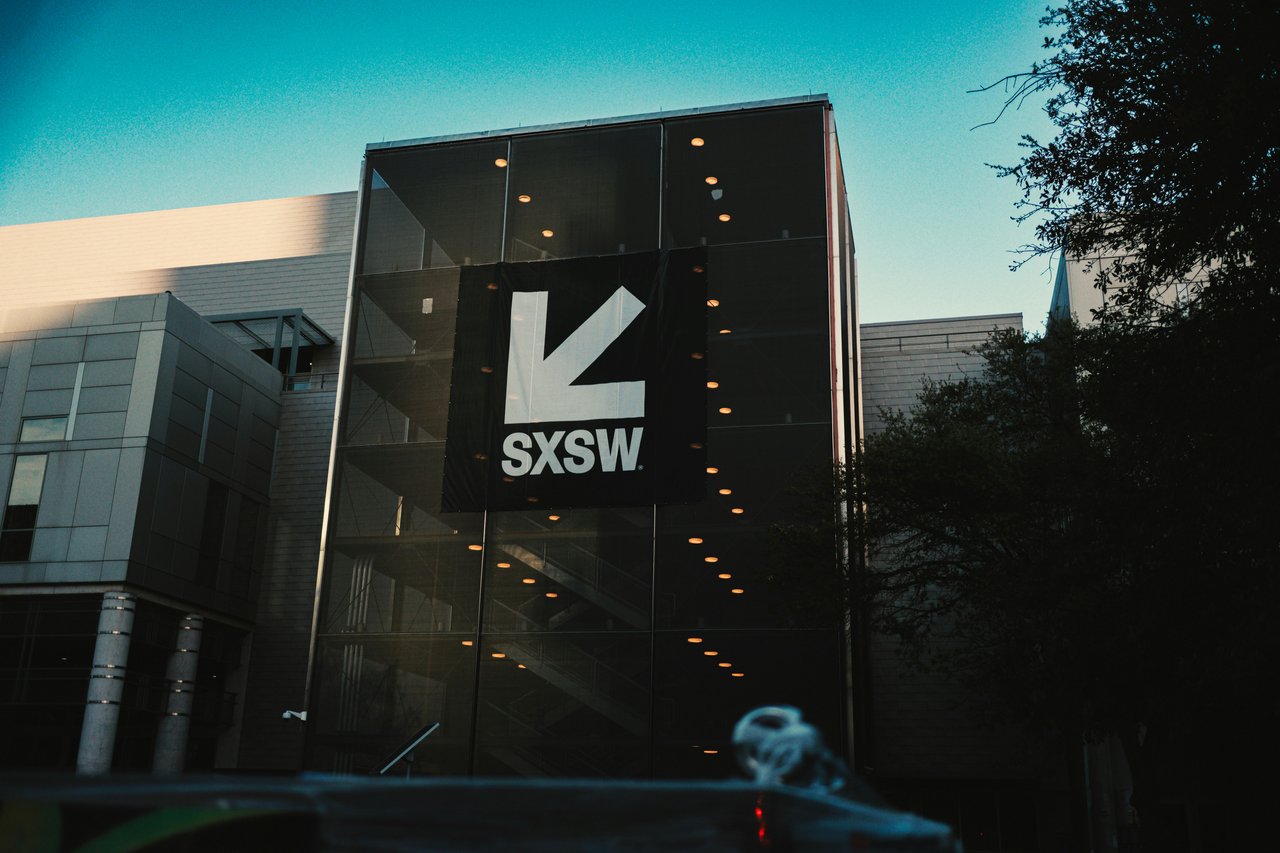
South by Southwest turned 40 in 2026. It started in 1987 with roughly 150 expected attendees, a modest budget, and the specific ambition of a music conference in a city that was just beginning to call itself the Live Music Capital of the World. Four decades later it generates over $370 million in annual economic impact on Austin, draws participants from more than 100 countries, and operates simultaneously as a music festival, a film and television festival, a technology conference, and an education summit. The question worth asking, forty years in, is what it actually means — not for the visitors who come for it, but for the city that built it.
Talk to The Davis AgencySearch Austin Listings
40 years SXSW in 2026 Founded 1987 — ~150 expected attendees at first edition | $370M+ Annual Economic Impact On Austin's economy (2024 figure) | 100+ Countries Represented Participants from across the global creative and tech industry | 4 festivals Running Simultaneously Music, Film & TV, Innovation, EDU — all at once in 2026 |
There are two ways to understand SXSW. The first is as an event — something that happens in Austin in March, that changes the city's character for a week, that can be attended with a badge or experienced from the sidewalk outside the venues. The second is as a phenomenon: the specific thing that happens when music, technology, film, and the entire apparatus of creative industry convergence happen in the same city at the same time, and what that convergence produces over forty years of repetition. The first version is a tourist guide. This is an attempt at the second.
What SXSW Actually Is — Which Is Not Obvious
Most people who have not attended SXSW think of it as one thing — usually the music festival, occasionally the tech conference. The reality is that SXSW is four distinct events that happen to share a city, a week, and a wristband system: the Music Festival, the Film & TV Festival, the Interactive Conference (technology, startups, gaming, creator economy), and SXSW EDU (education and learning innovation). Each has its own programming identity, its own audience, and its own set of industry conversations that would constitute a significant standalone event in any other city.
The convergence of these four tracks in a single week is not incidental — it is the point. SXSW has the power to elevate a city like Austin into a living laboratory of ideas. The reason the convergence produces something unusual is that the boundaries between the tracks are porous: the filmmaker meets the startup founder at a party, the musician takes a panel on AI-generated music, the venture capitalist watches a documentary about a company they are considering backing. The conversations that happen in the margins of SXSW — in the hallways, at the food trucks, on the terraces of the venues that cluster along Red River Street — are the conversations that make the event specific rather than generic.
No other American city hosts all four of these industries at the scale SXSW does, simultaneously, for a week. That specificity is what has made Austin the venue for forty years rather than the event cycling through host cities the way other conferences do. SXSW is not a touring event. It is an Austin event in the way that ACL is an Austin event — specific to this place, shaped by this place, and in some way unimaginable anywhere else.
The Origin Story: 150 People in 1987
SXSW was founded in 1987 by Roland Swenson, Louis Jay Meyers, Louis Black, and Nick Barbaro — most of them connected to the Austin Chronicle, the city's alternative weekly — as a music industry conference designed to showcase Austin's emerging music scene and connect local musicians with national industry contacts. The first edition expected roughly 150 people. The model was modest: panels about the music business, showcase performances at Austin clubs, a few hundred registrants from the music industry.
The Interactive Conference track — what would become the technology arm of SXSW — was added in 1994, when the internet was still a novelty and the idea that technology deserved its own track at a music conference was itself a speculative proposition. The film festival came in the same period. SXSW EDU arrived decades later. Each addition expanded the audience and complicated the identity of the event — which is a more interesting identity for the complexity.
The specific year that most crystallized SXSW's technology relevance was 2007, when Twitter publicly launched at the conference and its real-time communication model spread through the SXSW audience in days. The growth of Twitter's usage during the 2007 festival — from a small user base to a genuinely viral presence among the technology and media professionals attending SXSW — made the case for the conference as a product launch venue and a technology trend indicator that the industry has treated it as ever since. Foursquare gained significant traction at SXSW 2009. The pattern of emerging technologies finding their first widespread adoption among the SXSW audience has repeated itself often enough to become a genuine industry dynamic rather than a marketing narrative.
Why Austin and Not Somewhere Else
The question that SXSW prompts, for anyone thinking seriously about urban identity, is why this happened in Austin rather than in a larger city. New York and Los Angeles both have larger music industries, larger film industries, and larger technology industries than Austin. What they do not have is the specific combination of proximity, informality, and creative permissiveness that makes the SXSW experience possible. Austin's scale — big enough to host a global event, small enough that the global event happens in the same streets where the Austin musicians have always played — is what makes the convergence work in a way it could not in a city that had already calcified its industry silos.
The 2026 Edition: Forty Years and a New Format
The 2026 SXSW — the 40th anniversary edition — was shaped by a constraint that became an opportunity. With the longtime home at the Austin Convention Center closed for a multi-year redevelopment, SXSW reinvented itself across downtown venues and clubhouses. At the same time, the festival was condensed from its usual 10-day rhythm to a tighter, 7-day run.
The new format distributed programming across three "clubhouses" rather than a single centralized venue: the music clubhouse at the Downright Austin, the film and TV clubhouse at 800 Congress, and the innovation clubhouse at Brazos Hall. In its 40th edition, the festival featured Music, Film & TV and Innovation taking place in the same time frame for the first time — all tracks running concurrently rather than in sequence. The effect, according to people who attended, was an event that felt more concentrated and more integrated than the sprawling multi-week version that had characterized SXSW at its largest.
For its 40th anniversary, SXSW embraced transformation. With a shorter schedule and a decentralized format, the event responded to logistical change with creativity and grit. The 2026 theme that emerged from the programming — "humans," with the SXSW SVP of programming noting that one theme stuck out above the rest as the organizing principle for the year's sessions — was as much a response to the AI conversation that has consumed the technology industry as it was an anniversary reflection. A festival that launched the year Twitter went mainstream choosing, forty years in, to center the irreducible human element of creativity and connection was a statement worth noticing.
What SXSW Does to Austin's Economy
In 2024, the festival generated over a $370 million impact on the city's economy. SXSW officials break this down into three components: attendance impact, operational impact, and partner impact. The attendance impact — the spending by festival participants on hotels, food, transportation, and entertainment — is the most visible dimension. The operational impact — SXSW's year-round Austin operations, its staff, and its vendor relationships — represents a more durable ongoing economic contribution. The partner impact — sponsor activations, brand presence, and the corporate spending that accompanies any event of this scale — is the dimension that fluctuates most with the broader economic environment.
The direct hotel and restaurant revenue during SXSW week is the number most Austin business owners think about. The festival brings hundreds of millions of dollars to Austin's economy each year, with local business owners describing SXSW as "a huge opportunity" for revenue generation. The specific businesses that benefit most directly: the music venues and bars along Red River Street and Sixth Street, the downtown restaurants that see their typical capacity strained for a week, the hotels that price their rooms at multiples of standard rates during SXSW, and the transportation infrastructure that moves the festival's population around a city that was not designed for this density.
The indirect economic impact — harder to measure but real — includes the corporate relocations that trace back to executives who first encountered Austin at SXSW, the startup ecosystem relationships that began with a SXSW panel connection, and the global media coverage of Austin that SXSW generates annually and that no conventional marketing effort could replicate at comparable cost. Austin's position on the global map of cities that matter for the technology and creative industries has been built, in part, through four decades of SXSW producing the world's creative class annual Austin visit.
The Resident Experience: Living in Austin During SXSW
The SXSW experience that no visitor's guide addresses is the one that Austin residents have: the week when the city they live in briefly becomes the city that everyone else is visiting.
The practical dimensions of SXSW week for Austin residents are specific and manageable with preparation. Downtown is congested — parking is impossible, rideshare wait times are extended, and the restaurants that residents frequent on a Tuesday in October require advance planning on a Tuesday in March. The sidewalks in the Red River Cultural District and around Sixth Street operate at a density that Austin's infrastructure was not designed for. Hotel rates in walkable distance of downtown venues are priced for visitors, not residents. The Austin that exists during SXSW week is genuinely different from the Austin that exists the week before and the week after.
Residents who have navigated multiple SXSW cycles develop a relationship with the festival that is characteristically Austin in its ambivalence. They appreciate what the festival signals about the city's identity and what it produces for the local music scene — the specific Austin clubs that get their highest-profile programming of the year during SXSW, the local musicians who play showcases for the largest industry audience they will encounter in Austin. They accommodate the inconveniences with the specific patience of people who have decided that the inconvenience is a reasonable trade for living in a city where SXSW happens every year. And they occasionally escape the city for the week, returning to find it returned to its normal self with a specific relief that is inseparable from appreciation.
The residents who most consistently describe the positive version of the SXSW experience are the ones who engage with it selectively rather than exhaustively — attending two or three things that matter to them specifically, using the week to encounter people from outside Austin who show up in their usual coffee shops and restaurants and who offer the specific perspective of people who chose to be in Austin for SXSW rather than anywhere else in March.
Considering Austin as your next city?
SXSW is one of the most honest arguments for what Austin is. The Davis Agency works with buyers relocating specifically to Austin — and helps them find the neighborhoods that make the most of what the city has built over forty years. The conversation is worth having.
The Honest SXSW Debate
Forty years is long enough for an honest accounting. SXSW's relationship with Austin has not been uniformly uncomplicated, and any serious discussion of what the festival means for the city should acknowledge that.
The growth that made SXSW globally significant has also made it less accessible for many of the local musicians and independent artists who were its original constituency. Badge prices at the fully credentialed level have moved out of reach for many participants who would have attended in the festival's earlier years. The concentration of brand activations, corporate sponsorship programming, and high-production-value showcases has shifted some of the festival's character away from the independent music discovery context that defined its early reputation.
The city's own relationship with SXSW has complicated over time. The traffic, the noise, and the strain on local infrastructure during the festival's peak years produced civic conversations about what Austin was trading for the economic impact. Some long-term Austin residents describe SXSW as a festival that belongs to the city in identity but has grown to feel less like something the city does than something that happens to the city every March.
These critiques coexist with the genuine case for SXSW's importance — and both are more honest than either uncritical celebration or cynical dismissal. The festival that turned 40 in 2026 is not the same festival that 150 people attended in 1987, and it is not the same festival that launched Twitter in 2007. Four decades in, SXSW continues to ask the same fundamental questions: where and how do ideas collide, evolve, and scale. The honest answer is that those questions are still worth asking, and Austin is still an unusually good place to ask them.
What SXSW Tells You About Austin
The thing SXSW most reveals about Austin is that the city has a specific theory of itself — a belief that the right combination of creative industries, outdoor culture, informality, and a sufficiently peculiar civic identity can produce something that no amount of deliberate urban planning would generate. Austin did not plan SXSW. Four people who worked at an alternative newspaper created it, the city's existing music culture gave it its first material, and forty years of compounding creative energy turned it into one of the most significant cultural events in the world.
That origin story — emergent rather than planned, local before it was global, specific before it was general — is the same story that describes Austin's food trailer culture, its live music density, its Barton Springs regulars, its Eeyore's Birthday Party, and most of the other things that make Austin distinctively itself rather than a version of somewhere else. SXSW is the most visible expression of something that is present in Austin at a smaller scale every day of the year. Understanding SXSW is, in some genuine sense, a way of understanding Austin.
For the corporate relocator who first encounters Austin during SXSW week — and a significant share of them do, attending as an industry participant rather than as a prospective resident — the festival is a compressed and intense version of what Austin offers at a sustained level. The creative energy, the outdoor cafes, the specific warmth of a city that has not yet calcified into the formality of a larger urban center, the sense of something happening: these are present during SXSW at a volume that can feel anomalous. The Austin residents know that it is not anomalous. It is just the everyday version turned up.
SXSW and the Real Estate Connection
A meaningful share of people who move to Austin cite SXSW as part of their initial encounter with the city — an event that they attended professionally or visited for, that gave them the first sustained experience of Austin's character at its most concentrated. The neighborhoods with the most direct relationship to SXSW's energy — East Sixth Street, the Red River Cultural District, the Rainey Street corridor — carry a location premium that reflects their position relative to the event and to the live music and food culture that the event amplifies. For buyers who are drawn to Austin specifically because of what SXSW represents, understanding the neighborhoods that are most embedded in that culture is the starting point for a meaningful housing search.
Frequently Asked Questions
Do I need a badge to experience SXSW, or is there a free component?
Both credentialed (badge) and free SXSW experiences exist simultaneously. Badge holders access official showcases, conference sessions, and credentialed events. Free outdoor stages throughout downtown Austin host live music performances that are open to anyone during the festival week. Unofficial or "unofficial" showcases — performances held at Austin venues during SXSW week but not officially part of the festival programming — often have no-cover or low-cover admission. Many Austin residents experience SXSW primarily through its free and unofficial programming, attending specific badge events only when a particular artist, speaker, or session justifies the investment. A full badge provides access to the comprehensive experience; a presence in downtown Austin during SXSW week provides substantial access without any credential.
How has SXSW changed as it has grown?
The changes most frequently cited by long-term observers: badge prices have increased significantly from the festival's early years, making full credentialed access more expensive and corporate sponsorship programming more prominent. The music discovery function — which was the festival's original purpose — has become one track of a multi-track event rather than the defining character. The festival's sheer scale has made the informal hallway conversation that produced many of its most significant connections harder to replicate. The 2026 format change — condensing to seven days, decentralizing across downtown venues — was interpreted by some observers as an adaptation that made the festival more concentrated and in some ways closer to its original character. The debate about what SXSW is now versus what it was is one that the Austin music and technology communities take genuinely seriously.
When is the best time to visit Austin if SXSW is a consideration?
For the SXSW experience itself, the second week of March in any given year. For Austin without the SXSW density, April is the most frequently recommended month by residents — similar weather, lower visitor volume, and a full event calendar in its own right. October is the other peak month, with ACL and Formula 1 both in the same four-week window. January and February offer the quietest version of Austin, which has its own appeal for visitors who want the city's daily life without the event overlay.
Related Reading from The Davis Agency
→ Austin's Annual Events Calendar: The Cultural Moments That Define Life in the City
→ ACL 2026: A Complete Guide to Austin's 25th Anniversary Music Festival
→ Why Austin Is Actually the Live Music Capital of the World
→ South Congress as a Real Estate Asset: How SoCo Proximity Drives Property Values
→ The Austin Corporate Relocation Guide: What Luxury Buyers Moving from Coastal Cities Need to Know
Ready to Live in the City That Built This?
SXSW is one of the most honest arguments for what Austin is. If you are evaluating a move to Austin — or looking for a home in the neighborhoods most embedded in what SXSW represents about this city — The Davis Agency is the right conversation to start.
Search Current Listings Call (512) 608-8811
Or email [email protected]. Derrik responds personally.
Derrik Davis · Broker/Owner, The Davis Agency · CLHMS Certified · TREC License #558841 · Serving Austin's luxury market since 2006.