What Actually Sells a Finished Spec in 78704
Developer Intelligence · August 2026
The short answer: finish the landscaping, stage it, photograph it properly, and write down everything a buyer can't see. At $3 million, three modern builds all look nice in photographs — what separates yours is whether the buyer understands why the window package, the mechanical system and the site work cost what they cost. Nobody can see spray foam. You have to tell them.
The building is the hard part and it's done. What's left is a marketing problem with a meter running on it. Here's what moves a finished 78704 spec, in rough order of how much it matters.
Talk Through a ListingCall (512) 608-8811
CURB Landscaping First A dirt yard reads as unfinished at any price | STAGE Empty Modern Reads Cold And smaller than it is | SPEC SHEET A Selling Document Not just something for the appraiser | AGENTS Where Buyers Come From At this price point, mostly through another agent |
Finish the Outside Before You Photograph the Inside
Landscaping is the most underweighted line item on a spec budget and the first thing a buyer evaluates.
A $3 million house with a dirt yard, a bare strip of decomposed granite and three gallon-sized plants reads as unfinished, and no amount of interior quality recovers it. The buyer's first impression forms from the street, and on a modern build with a compact footprint the site work is a large part of what they're looking at — the drive, the walk, the fence, the grade, whatever screens the neighbors.
The instinct to defer landscaping because the money is tight at the end is understandable and it's usually the wrong call. It's also the cheapest remaining lever you have — a fraction of a percent of project cost affecting the impression that governs everything after it.
Practical note for 78704 specifically: where you've protected heritage oaks through an eighteen-month build, make the landscaping work with them rather than around them. The canopy is a genuine asset in this market, and a site design that treats mature trees as the organizing feature reads as intentional rather than constrained.
List when it photographs finished, not when it's technically complete. Those are different dates. Interiors photograph finished before the punch list is closed — a missing cabinet pull doesn't show. Exteriors photograph finished later than you'd like, because plants need to look established. If the schedule forces a choice, get the landscaping in and shoot the exterior last rather than delaying the entire launch for a punch item nobody will see.
Stage It, and Stage It for This House
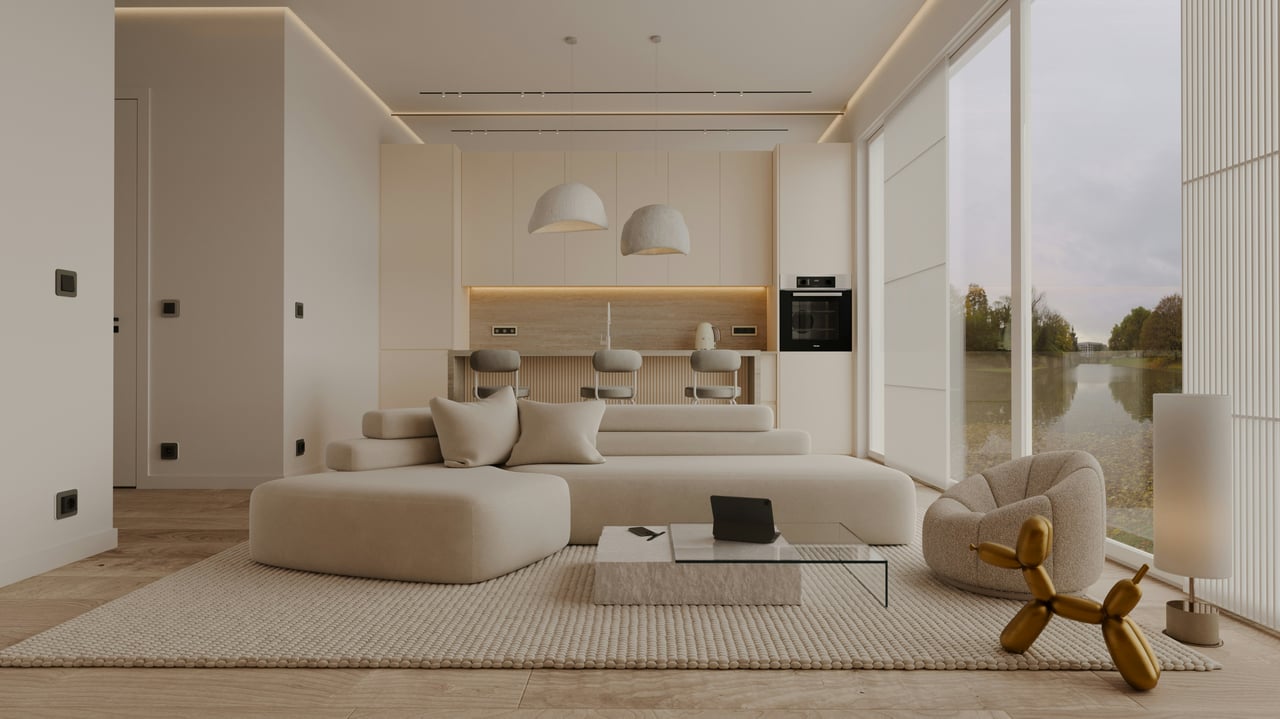
Empty modern architecture photographs cold and shows small. Hard surfaces, big glass, open plans and no soft material — the rooms echo, the scale is unreadable, and buyers standing in a vacant 2,800 square foot house consistently estimate it smaller than it is.
Two things staging has to accomplish on a spec beyond looking nice.
Establish scale. Furniture tells a buyer whether their sofa fits, whether the primary bedroom takes a king, whether the dining area seats eight. On a FAR-capped 78704 house where square footage is genuinely constrained, this matters more than in a market where space is abundant.
Show the intended life. The buyer in this neighborhood is coming for the location — the park, the greenbelt, the trail, walking to dinner. Staging that reflects that is more persuasive than staging that could be anywhere. A mudroom or drop zone shown working, outdoor living furnished as a real room rather than a token bistro set, a flexible ground-floor space shown as something specific.
And a note on restraint: modern architecture is the product. Staging that competes with it — heavy furniture, busy art, too many pieces — makes the house look smaller and the design look worse. The job is to warm the rooms and set the scale, not to decorate.
Photography, Specifically for Modern Builds
Modern architecture photographs differently than traditional, and the wrong photographer produces technically competent images that make the house look worse.
Verticals matter. Clean lines are the point of the building. A shot with converging verticals makes a carefully composed elevation look amateur. This is basic architectural photography and plenty of residential shooters don't do it.
Natural light and the window walls. A big part of what you built is the glass and the light it brings in. Over-flashed interiors flatten that and kill the connection to outside. Ask to see how a photographer handles a bright window in frame.
Shoot the outdoor connection. The frame from inside looking out through the glass to the covered patio and the trees is frequently the single most persuasive image of a 78704 modern build, and it's often missing entirely from a listing.
Twilight exterior. One dusk shot with interior lights on. It's the image that gets shared, saved and remembered, and modern builds photograph better at dusk than almost any other house type.
Include a floor plan. New construction buyers want it, out-of-town buyers need it, and it answers the layout questions that otherwise become showing requests from people who were never going to buy.
Write Down What Nobody Can See
This is the part most builders skip and it's where the premium gets justified.
A buyer touring three modern builds at $2.9 million sees three nice houses. They cannot see which one has the better window package, which has spray foam versus batt insulation, which has the higher-efficiency mechanical system, which required $80,000 of stepped foundation and retaining work the slope demanded, which protected three heritage oaks through construction at real cost, and which has the plumbing and electrical rough-in done properly rather than adequately.
If you don't tell them, they price all three the same and pick on finishes. Which means the builder who spent less on what's behind the drywall wins, and you funded quality nobody paid you for.
Produce a real specification sheet. Systems, insulation, windows, structural work, site work, energy performance, warranty. One page, plain language, available at every showing and attached to the listing. It works on buyers, it works on their agents, and it works on the appraiser — who has the same visibility problem and a harder job.
Include the invisible site work explicitly. On a sloped Barton Hills or Travis Heights lot, a large share of what you spent is underground and nobody will ever see it. Documented, it becomes a reason your house is worth more than the one on the flat lot two streets over.
Finishing a spec in 78704?
The last six weeks before listing — landscaping, staging, photography, the spec sheet — do more for the outcome than anything after it. The Davis Agency works with builders across Barton Hills, Zilker, Bouldin Creek and Travis Heights and is happy to walk a project before you've committed to a launch date.
Most of Your Buyers Arrive Through Another Agent
At this price point in central Austin, a large share of buyers come through an agent who already knows them. Which means your marketing has two audiences, and the professional one gets underserved.
The agents who work this neighborhood at this price point are a knowable list. They should hear about your house directly, before or at the same time as the public, with the specification sheet and the floor plan attached. Not a mass email blast — targeted outreach to people who have buyers in this range.
A broker open is worth doing on a spec in a way it often isn't on a resale, because the product is unfamiliar. An agent who has physically walked your house can describe it to a client; one who has only seen photos cannot distinguish it from the other two modern builds on their list.
Make it easy to show. Vacant is an advantage — use it. Flexible access, a lockbox that works, lights that are on, a house that's cool in August. Every friction point between an agent's idea and their client standing in your living room costs you showings.
What Buyers Actually Evaluate
Worth knowing what the questions are, because they're not always what builders expect.
Buyers in this market ask about storage more than almost anything — where the bikes go, where the paddleboards go, where the gear lives when you come back from the greenbelt. On a code-capped house, visible, well-designed storage is a genuine differentiator and it's frequently the thing that closes a deal.
They ask about the flow from outside in. Can you come back muddy without walking through the living room. Is there a drop zone. Does the outdoor space function as a room or is it a patio slab with a grill on it.
They ask about the primary suite location, because most 78704 new construction puts it upstairs and a meaningful slice of buyers won't accept that. If yours is down, say so prominently — it's a real differentiator in this market.
They ask about parking, because the carport-versus-garage trade is common here and buyers arriving from other markets find carports unfamiliar. Explaining why it's there — that it bought them several hundred additional square feet of house under the FAR cap — turns a perceived compromise into a demonstration that the house was designed intelligently.
A Word on Price
Everything above is worth more when the price is right and worth less when it isn't. No amount of photography saves a house priced above what the comps support — it just produces very nice images of a listing accumulating days on market while your carry runs.
The first two weeks generate more traffic than any period that follows, and you get them once. Spending them on an aspirational number and correcting in week six costs more than the premium was ever worth.
Frequently Asked Questions
Should you stage a spec home?
Generally yes, particularly on modern architecture. Empty contemporary interiors photograph cold and read smaller than they are, and buyers in vacant homes consistently underestimate room dimensions. Staging establishes scale, warms hard surfaces, and demonstrates how the house is meant to be lived in. Keep it restrained — the architecture is the product, and staging that competes with it works against the house.
When should a builder list a spec home?
When it photographs finished, which is usually before the punch list is fully closed and after the landscaping is in. Interiors photograph complete even with minor items outstanding; exteriors don't, because a bare yard reads as unfinished at any price. If the schedule forces a trade, prioritize landscaping and shoot the exterior last rather than delaying the launch for punch items no one will notice.
What do buyers look for in a new construction home in Austin?
In central Austin specifically: storage for outdoor gear, the flow between inside and outside, whether the primary suite is on the ground floor, and how the parking is handled. Finishes matter less than builders expect, because at a given price point most new construction presents similarly. What buyers can't evaluate on their own — window packages, insulation, mechanical systems, structural site work — needs to be documented for them.
How do you market a spec home to other agents?
Targeted rather than broadcast. Identify the agents actively working that neighborhood and price point, contact them directly with the floor plan and specification sheet attached, and host a broker open — which is more valuable on new construction than on a resale, because the product is unfamiliar and an agent who has walked the house can describe it to a client in a way one who has only seen photographs cannot.
Related Reading from The Davis Agency
→ Choosing a Listing Agent for Your Spec Build
→ How Spec Homes Get Appraised in 78704
Coming Up on a Launch?
The weeks before listing are where a spec's outcome is mostly determined, and they're the weeks builders have the least attention left for. The Davis Agency has worked 78704 new construction since 2006 and can help you plan that stretch properly.
Start the ConversationCall (512) 608-8811
Derrik Davis · Broker/Owner, The Davis Agency · CLHMS Certified · TREC License #558841 · Serving 78704 and the greater Austin luxury market since 2006. This article is general market commentary and is not legal or financial advice.