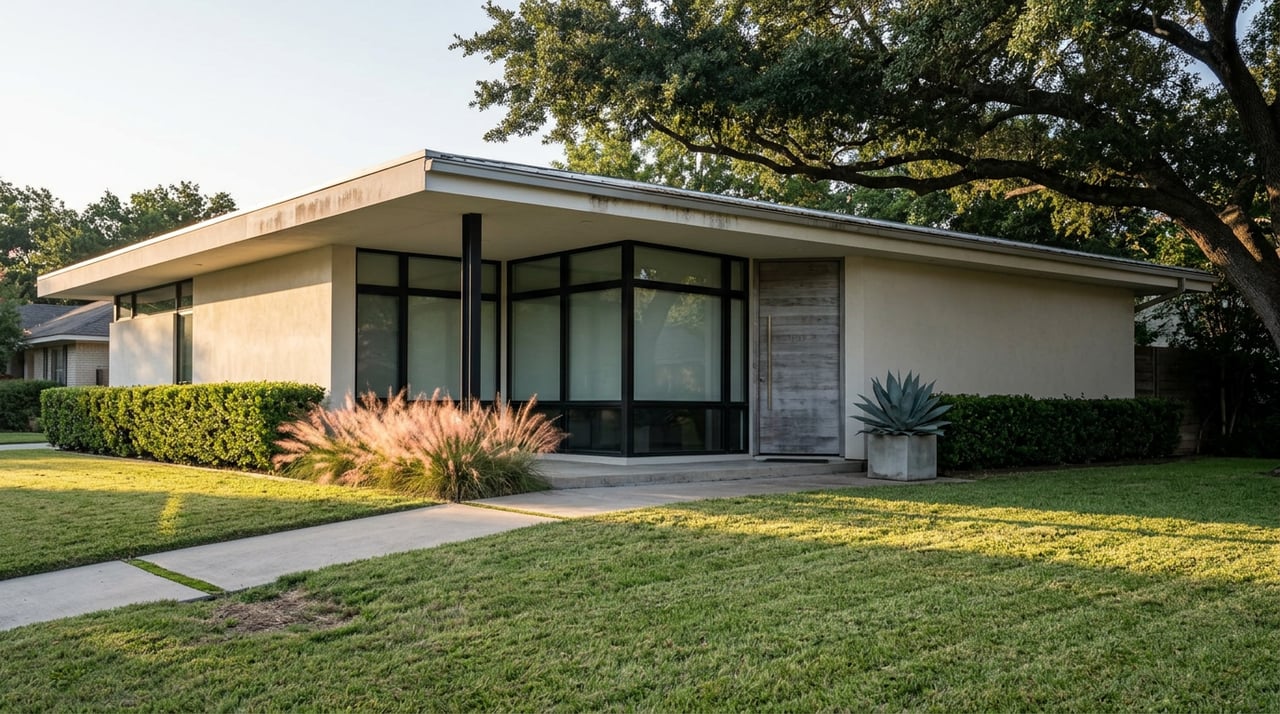
Buying a Spec Home Pre-Drywall in 78704
Developer Intelligence · August 2026
The short answer: buying before drywall gets you selection control and one genuinely valuable hour of access. What it does not get you, in 78704, is much structural flexibility — the FAR and cover math locked that in before the slab went down. The window that actually matters closes at mechanical rough-in, and the single highest-value thing you can do in it costs almost nothing: blocking.
Spec homes in Barton Hills, Zilker, Bouldin Creek and Travis Heights routinely go under contract months before completion. Buyers like the idea of "customizing" a house already underway. Builders like the certainty. Both sides are usually working from different assumptions about what's still on the table, and the gap surfaces about six weeks in. Here's what's actually changeable at each stage, what to inspect, and what belongs in writing before you sign.
Tour a Build in ProgressCall (512) 608-8811
FRAMING Last Call for Layout Openings and partitions, at a cost | ROUGH-IN The Real Deadline Electrical, plumbing, HVAC, blocking | 1 HOUR Pre-Drywall Walkthrough The most useful hour of the entire purchase | FINISHES All That's Left After Once drywall is up, you're picking colors |
What's Still on the Table, Stage by Stage
Stage | Still Changeable | Already Gone |
|---|---|---|
Foundation poured | Almost everything above the slab | Footprint, siting, under-slab plumbing locations, anything driven by FAR and cover |
Framing | Window and door openings, interior partitions, ceiling treatments, structural openings — all at real cost and possible schedule impact | Overall massing, roof form, anything that would change the permitted set |
Mechanical rough-in | Outlet and switch locations, recessed lighting layout, data and low-voltage runs, hose bibs, gas stubs, in-wall blocking, plumbing fixture rough locations | Wall positions in most cases — moving a wall now means redoing work already inspected |
Insulation and drywall | Paint, tile, flooring, cabinetry, counters, plumbing and lighting fixtures, hardware | Everything inside the walls. This is the hard stop. |
Every builder and contract differs. What a specific builder will accommodate depends on their contract, their schedule and how far along the trades are. Confirm before assuming any change is available.
Why 78704 Spec Homes Are Less Flexible Than You'd Think
Buyers arriving from master-planned communities expect a menu — bump out the primary suite, add a flex room, extend the covered patio. On a central Austin infill lot, most of that isn't available, and the reason has nothing to do with the builder being difficult.
These houses are designed against binding constraints. Impervious cover capped at 45 percent of the lot, floor-to-area ratio capped at 40 percent, the Subchapter F envelope shaping the massing, and often a protected tree dictating where the footprint could sit at all. A well-designed 78704 spec home is usually sitting within a few dozen square feet of its FAR ceiling. There is no bump-out available, because there is nothing left to bump into.
What that means practically: come in with expectations set on the inside of the envelope rather than the outside. The value you can add pre-drywall is in how the house works, not how big it is.
The cheapest thing you'll ever ask for: blocking. Plywood backing installed between studs before drywall, wherever you might later hang something heavy — a wall-mounted television, a floating vanity, a heavy mirror, shelving, a future grab bar, a swinging bench on the porch. It costs a builder almost nothing at rough-in. After drywall it's an ugly, expensive repair. Walk the house with a list of every wall where something might hang, and hand it over before insulation.
The Pre-Drywall Walkthrough
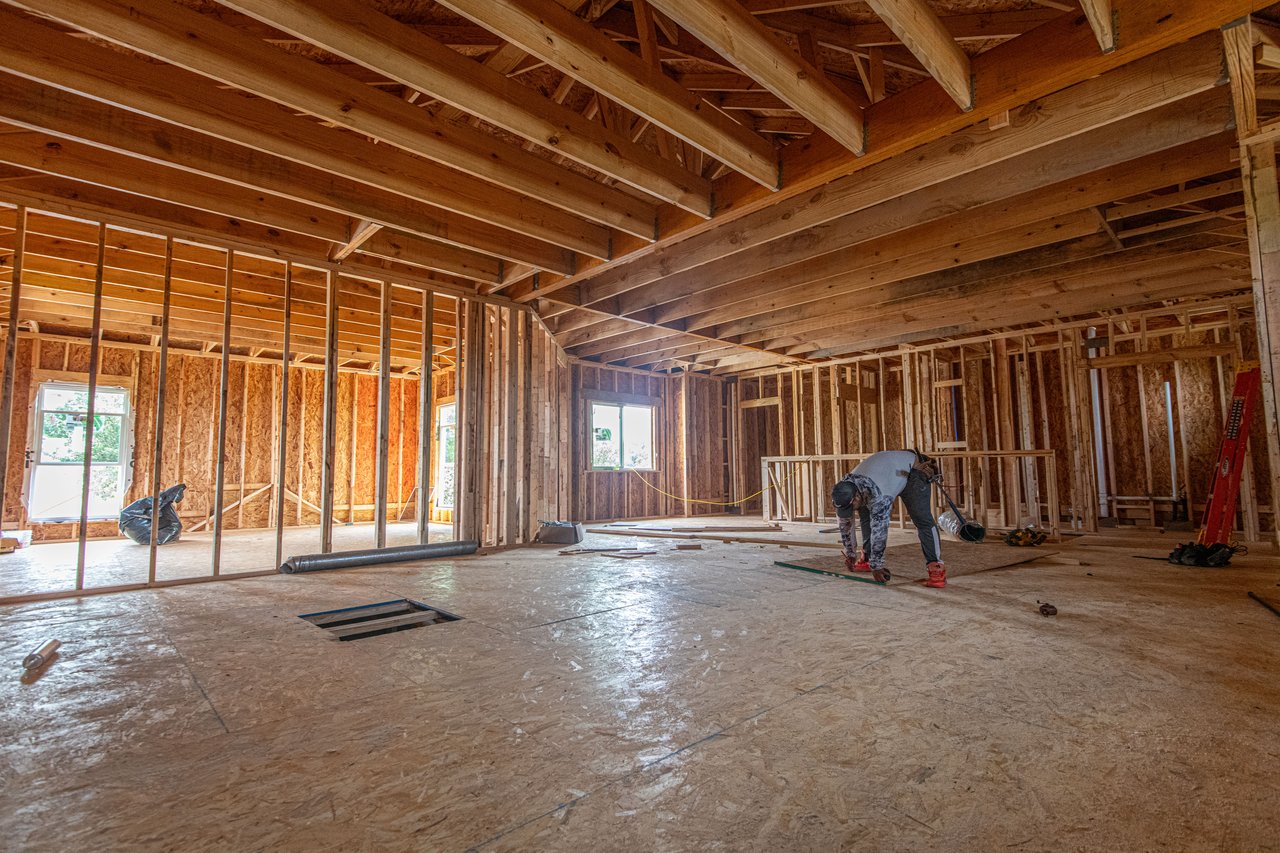
This is the single most useful hour available to you as a buyer, and most people spend it admiring the framing instead of working.
Photograph every wall, comprehensively. Every room, every elevation, with something in frame for scale. Five years from now when you're hanging a shelf or chasing a leak, these photos tell you exactly where the studs, wires and pipes are. Nothing else you do that day has a longer payoff.
Bring a furniture plan. Outlet and switch placement is decided by code minimums and habit, not by where your bed goes. Walk each room with actual dimensions and ask for outlets where you'll need them — either side of the bed, behind the console, at the desk wall, on the porch.
Look at the mechanical layout. Where do supply registers land and where are the returns? A room with supply and no return path will be uncomfortable forever, and it's cheap to fix now. Check whether any plumbing has been run in an exterior wall — it's not ideal, and Austin does freeze.
Stand where you'll actually stand. Sightlines read completely differently in framing than on a plan. Look out each window opening. Check the view from the kitchen to wherever kids or guests will be. If a window is in the wrong place, this is the last moment anyone can say so.
Bring your own inspector. Municipal inspections confirm code compliance, not quality, and they are not performed on your behalf. A third-party pre-drywall inspection is inexpensive relative to the purchase and it happens at the only moment the structure is visible.
Looking at a 78704 spec home currently under construction?
Knowing which builder is behind it, what they've delivered before, and what they'll actually accommodate changes how you negotiate. The Davis Agency works with the builders doing most of the infill in Barton Hills, Zilker, Bouldin Creek and Travis Heights.
Contract Terms That Deserve Attention
A spec home under construction is not a resale purchase, and the paperwork often reflects that. Some builders use the standard promulgated forms with addenda; others use their own contract. Read which one you're being handed, and have an attorney look at it if it's the latter.
Completion date and what happens if it slips. Is there an outside date? What are your remedies if it passes? Vague language here is common and it matters most when you have a lease ending or a house already sold.
Selection deadlines. Builders need decisions on a schedule the trades can work with. Know when each category is due and what happens if you miss it — usually the builder's standard selection goes in and you own it.
Change order process. Written approval before work proceeds, a stated turnaround for pricing, and clarity on whether the builder's fee applies. Same discipline as a custom build, smaller scope.
Inspection rights, stated explicitly. Your right to a third-party inspection at pre-drywall and again before closing should be in the contract, not assumed. Most builders agree readily. Get it written down anyway.
Deposits and where they sit. Understand what's earnest money, what's a non-refundable selection deposit, where the funds are held, and what you recover under which circumstances.
Warranty. What's covered, for how long, and who answers the phone in year two. A one-year workmanship warranty is common; structural coverage typically runs longer. Ask what the process actually looks like, because the document and the experience are not always the same thing.
The Case For and Against Buying Early
For: you get selection input, you get pre-drywall visibility that a finished-home buyer never has, you avoid competing against other offers when the house hits the market complete and photographed, and in a rising market you've fixed your price ahead of delivery.
Against: you're committing to a house you can't fully see, on a timeline you don't control, with financing exposure if rates move before you close. You also lose the ability to compare against whatever else comes to market in the interim. And if the builder's execution disappoints in the finishes, you're already in.
The honest read: buying pre-drywall makes most sense when you know the builder's completed work, when the specific lot or floor plan is genuinely hard to replicate, and when your timeline has some give. It makes least sense when you're buying on the strength of renderings from a builder whose finished product you've never stood in.
Frequently Asked Questions
What can you change when buying a spec home before drywall?
Before mechanical rough-in you can typically adjust outlet and switch locations, recessed lighting layout, data and low-voltage runs, plumbing fixture rough locations, gas stubs, hose bibs and in-wall blocking. At the framing stage, window openings and interior partitions may still be changeable at a cost. Once drywall is installed, only finishes remain adjustable. On 78704 infill lots, footprint and square footage changes are rarely available at any stage because the design is already at its FAR and impervious cover limits.
What is a pre-drywall inspection?
A third-party inspection performed after framing and mechanical rough-in but before insulation and drywall, while the structure, wiring, plumbing and ductwork are all still visible. It is separate from municipal inspections, which verify code compliance on the city's behalf rather than yours. It is the only point in the build where a buyer can see what will be permanently concealed.
Should I get blocking installed before drywall?
Yes, and it is the highest-value low-cost request available to a pre-drywall buyer. Blocking is plywood backing installed between studs to support heavy wall-mounted items later — televisions, floating vanities, large mirrors, shelving, grab bars. It costs very little at rough-in and becomes an expensive drywall repair afterward. Walk the house and identify every wall where something might eventually hang.
Is buying a spec home under construction risky?
It carries different risks than a resale purchase — completion timing you don't control, financing exposure if rates move before closing, and commitment to finishes you have only seen as samples. Those risks are manageable when you know the builder's completed work, have clear contract language on completion dates and remedies, secure written inspection rights, and understand the warranty. They are considerably higher when buying from an unfamiliar builder on the strength of renderings alone.
Related Reading from The Davis Agency
→ Who's Actually Building in Barton Hills Right Now
→ What a Zilker Lot Actually Supports: Cover, FAR, and the Trees
→ Fixed Price vs. Cost-Plus: How 78704 Builder Contracts Actually Work
Considering New Construction in 78704?
Whether you're evaluating a spec home mid-build, comparing builders, or deciding between buying finished and buying early, having someone in the conversation who knows the builder's track record changes the outcome. The Davis Agency has worked 78704 new construction since 2006.
Start the ConversationCall (512) 608-8811
Derrik Davis · Broker/Owner, The Davis Agency · CLHMS Certified · TREC License #558841 · Serving 78704 and the greater Austin luxury market since 2006. This article is general market commentary and is not legal advice. Have any new construction purchase contract reviewed by a qualified Texas real estate attorney before signing.