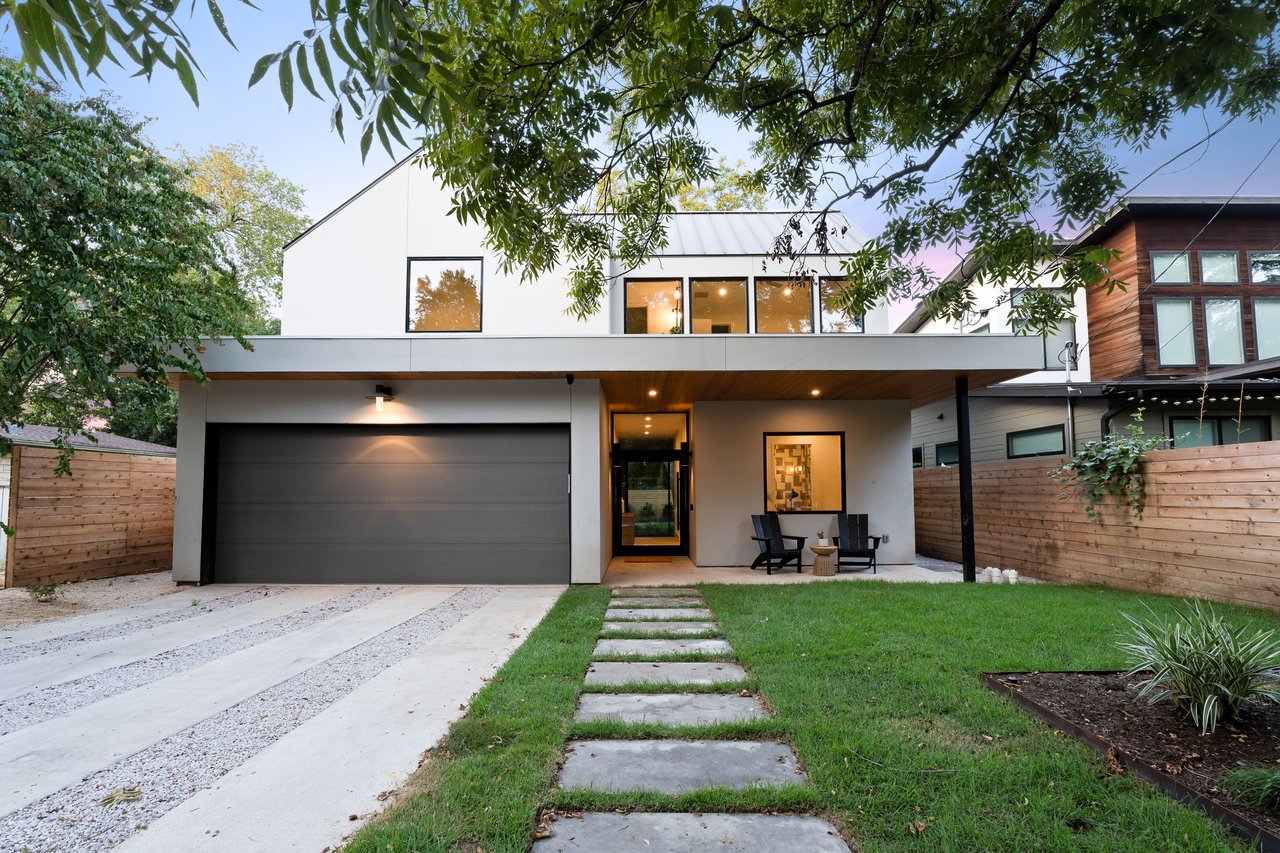
Homeowner Decision Guide · June 2026
The Austin luxury homeowner who has owned their 78704 property for ten years is sitting on one of the most significant financial assets in their net worth — and facing one of the most consequential decisions about what to do with it. Sell and deploy the equity. Hold and wait. Rent and generate income. Each path has a coherent case behind it and a set of circumstances where it is clearly the right answer. This framework is designed to help you figure out which one fits yours.
Call (512) 608-8811 Get a Current Valuation
$7K–$15K Monthly Luxury Rental Range 78704 homes at $2M+ price point, 2026 | $500K Married Capital Gains Exclusion Federal — primary residence 2 of last 5 yrs | 3–5% Austin Luxury Appreciation Conservative long-term annual estimate | 2-4 mo Luxury Tenant Search Time For a qualified, well-vetted tenant |
Most Austin luxury homeowners who are thinking about their options have been thinking about them for longer than they realize. The decision to sell, hold, or rent is rarely made suddenly — it typically develops over months of passive consideration before it becomes an active inquiry. This guide meets that inquiry directly, with the financial framework and the honest trade-off analysis that makes the decision clearer rather than more complicated.
A note before the framework: this guide covers the financial and practical dimensions of each path. The tax implications discussed here are for general informational context only — your specific situation, cost basis, holding period, income level, and state of residency all affect your actual tax outcome. Work with a qualified CPA or tax advisor before making any decision with significant tax consequences.
The Three Paths — What Each Actually Means
Sell. Convert the asset to liquid capital. Execute a market transaction, pay transaction costs (approximately 6–8% of sales price for a traditional listed sale, less for an off-market transaction), settle any remaining mortgage balance, address the tax implications of the gain, and deploy the net proceeds into whatever use produces the best return given your financial objectives. Selling is final — it closes the position and removes both the upside and the downside of future ownership.
Hold. Maintain ownership and continue occupying the property, deferring the sell-or-rent decision. Holding is not a passive choice — it is an active decision to retain an asset rather than deploy its equity. Every month of holding is a month where the capital locked in the property's equity is not working in an alternative use. The hold decision is defensible when the asset is appreciating at a rate that justifies the opportunity cost of the equity tied up in it, and when no alternative use of that equity would produce a meaningfully better risk-adjusted return.
Rent. Convert the primary residence to an income-producing rental property while relocating to another residence. Renting generates monthly income that partially offsets the opportunity cost of retained equity, creates a depreciation benefit for tax purposes, and maintains exposure to the property's future appreciation. It also creates landlord responsibilities, converts the tax treatment of the asset from primary residence to investment property, and eventually creates a capital gains exposure that selling as a primary residence would have handled more favorably.
The Financial Comparison: Running the Numbers Honestly
The comparison between sell, hold, and rent requires a specific financial model for your specific property — generalized analysis produces directional guidance but not decision-quality precision. That said, the framework below illustrates the key variables and how they interact for a representative 78704 luxury property.
Illustrative scenario: A Barton Hills home purchased for $800,000 in 2016, worth approximately $2.5M in 2026. Mortgage paid off or nearly paid off. Owner is considering moving to a new primary residence and evaluating whether to sell or rent the Barton Hills property.
Variable | Sell Path | Rent Path |
|---|---|---|
Gross proceeds / value | $2.5M sales price | $2.5M retained equity |
Transaction costs | ~$150K–$200K (6–8%) | $0 at time of rental |
Capital gains (federal) | $1.7M gain, $500K married exclusion → ~$1.2M taxable at 20% + 3.8% NIIT for high earners | Deferred — but primary residence exclusion may be reduced or lost if rented 2+ years |
Annual rental income | N/A | $84K–$180K/yr (gross, $7K–$15K/mo) |
Annual rental expenses | N/A | Property tax ~$50K, insurance ~$8K, maintenance/management ~$15K–$25K → $73K–$83K annual |
Annual net rental income | N/A | ~$1K–$47K (highly variable) |
Gross rental yield on equity | N/A | 3.4–4.8% gross; 0–1.9% net |
Equity opportunity cost | Proceeds invested at 6–7% = $138K–$161K/yr | $2.5M locked in an asset generating 0–2% net yield |
Illustrative scenario only. Actual figures depend on specific property, current market, tax situation, and financing status. Capital gains analysis requires consultation with a qualified tax advisor.
The Equity Opportunity Cost — The Variable Most Homeowners Ignore
The most important financial variable in the sell vs. rent decision is the one that does not appear in the rental income calculation: the opportunity cost of the equity locked in the property. A homeowner who retains a $2.5M asset generating $1K–$47K in net annual rental income is implicitly choosing that return over whatever their $2.5M would produce in an alternative investment. If a conservatively invested portfolio returns 5–7% annually on $2.5M, the opportunity cost of the rental path is $125K–$175K per year. Most homeowners do not run this calculation before deciding to rent. It is the most important calculation in the analysis.
What Luxury Homes Actually Rent For in 78704
The rental income assumption in any sell vs. rent analysis is only as good as the actual rental market data behind it. For 78704 luxury homes in 2026, the long-term rental market looks like this:
A well-maintained, nicely finished 78704 luxury home in the 2,800–3,400 SF range with a pool and outdoor living program will generate $7,000–$15,000/month in long-term rental income from a qualified tenant. Larger homes in the 3,500+ SF range or those in the most premium positions — Greenbelt-adjacent, strong park proximity — can command $12,000–$20,000/month from the right tenant.
The gap between the gross rental income and the net rental income is where most homeowners encounter the first surprise in their rental analysis. Property taxes on a $2.5M assessed home in Travis County run approximately $45,000–$55,000 annually. Landlord insurance (which is more expensive than homeowner's insurance) adds $7,000–$10,000. A property manager — which most luxury homeowners discover they need after their first tenant — charges 8–12% of monthly rent, or $6,700–$14,400 annually on $10,000/month rent. Maintenance, repairs, and the inevitable tenant-related wear on a luxury finishes package adds another $8,000–$15,000 per year on average.
The net result: a $2.5M home generating $96,000 in gross annual rent may produce $10,000–$20,000 in net annual income after all carrying costs — a net yield of 0.4–0.8% on the asset's equity value. Whether that yield, plus the expected appreciation, justifies retaining the asset is the core question in the analysis.
The Landlord Reality for Luxury Homes
The decision to rent a luxury primary residence is frequently made with an idealized picture of what being a landlord means. The reality deserves honest description before you commit to it.
Finding a qualified tenant takes time. A genuine luxury tenant — someone who will treat a $2.5M home with the care it requires, who has verifiable income sufficient to support $10,000/month rent comfortably, and who intends to stay long enough to justify the disruption of tenanting the home — is not easy to find. The qualified tenant pool for true luxury rentals in Austin is limited, and matching the right tenant to your property can take 6–12 months or longer. Vacancy during the search period is a direct cost that reduces the yield calculation further.
Luxury tenants have luxury expectations. A tenant paying $10,000/month for a Barton Hills home expects the home to perform at that price point — mechanically, aesthetically, and in terms of responsiveness when something needs attention. The HVAC that functions adequately for an owner who accepts minor imperfections is the HVAC that a luxury tenant's property manager calls about immediately. Deferred maintenance that an owner tolerates becomes a lease obligation issue when there is a tenant.
You are no longer the homeowner in the way you were. The home that carries personal memories, specific furniture arrangements, landscaping decisions made over years — all of it becomes the tenant's daily environment rather than yours. Owners who have strong emotional attachment to their home frequently find the experience of renting it to someone else harder than they anticipated, regardless of the financial rationality of the decision.
The Tax Dimension
The tax implications of the sell vs. rent decision are significant and require professional guidance specific to your situation. The general framework is as follows.
Capital gains exclusion — use it or lose it carefully. The IRS allows a primary residence exclusion of $250,000 (single) or $500,000 (married filing jointly) on capital gains from the sale of a home you have owned and used as your primary residence for at least 2 of the last 5 years. For a homeowner with a large gain — the $1.7M gain in our illustrative scenario — this exclusion is the single most valuable tax benefit available in the sell analysis. The critical timing issue: if you rent the property for more than 3 years, you lose the 2-of-5-year primary residence qualification, and the full gain becomes taxable as investment property gain rather than primary residence gain. This is a potentially significant tax cost — potentially $200,000–$400,000 in additional federal tax — for homeowners who convert to rental use without considering the exclusion implications.
Depreciation in the rental period. When a primary residence is converted to rental use, the owner can begin depreciating the structure (not the land) over 27.5 years for residential rental property. This depreciation creates a paper loss that offsets rental income for tax purposes, often reducing or eliminating the rental income tax liability during the holding period. The benefit: lower tax on rental income while you hold. The catch: depreciation recapture — when you eventually sell the property as investment property, the IRS taxes the accumulated depreciation deductions at a 25% recapture rate. The depreciation benefit defers tax rather than eliminating it.
The 1031 exchange option for rental properties. If you have held the property as a rental long enough to satisfy investment property treatment (typically at least one to two years as a rental), the property qualifies for a 1031 exchange — selling and deferring the capital gains by rolling the proceeds into a replacement investment property. This is a powerful tool for investors who want to continue deploying capital in real estate without triggering the full capital gains liability. It requires specific timing (45-day identification, 180-day close), a qualified intermediary, and a replacement property that satisfies the exchange rules. For homeowners who are converting a primary residence to rental with eventual sale in mind, the 1031 path is worth understanding in advance — even if the decision to use it comes later.
The Market Timing Question
Austin's luxury market in 2026 is a normalized market — not the frenzied peak of 2021–2022, not a correction, but a balanced market with real transaction velocity and real negotiating dynamics. Understanding the current market context helps frame the sell decision relative to where prices have been and where they are likely to go.
The Austin luxury median in Q1 2026 stands at approximately $1.45M, with 78704 new construction exits at $2.5M–$4M depending on neighborhood and specification. Year-over-year appreciation at the luxury tier is running approximately 3.8% — positive, consistent, but not the extraordinary gains of the 2020–2022 period. The outlook for continued modest appreciation is supported by Austin's sustained population and corporate relocation inflows and the limited supply of luxury residential land in the most desirable submarkets.
For homeowners considering the timing of a sale: the current market is not distressed, but it is also not peak. There is no evidence of impending correction that would argue urgently for selling now, and there is no evidence of a return to 2022-level appreciation that would argue urgently for waiting. The market timing component of this decision, for most homeowners, should be secondary to the financial analysis above — because trying to time the Austin luxury market precisely is an exercise with limited payoff relative to simply making the decision that best fits your financial objectives and personal circumstances.
Want to know what your 78704 home is worth in the current market?
The Davis Agency provides current valuations for 78704 luxury homeowners — grounded in the most recent comparable sales and specific to your property's position, condition, and lot characteristics. The valuation conversation is the right starting point for any sell, hold, or rent analysis.
Which Circumstances Clearly Favor Each Path
Sell when: Your gain is large and the primary residence exclusion is available — use it before you lose it. You have a clear, productive use for the net proceeds that generates a return meaningfully above the property's net rental yield and expected appreciation. You are moving to a location where you will not want to manage Austin real estate from a distance. Your emotional relationship with the home is strong enough that having a tenant in it would be genuinely difficult. Your tax situation makes a large capital gains realization manageable relative to the alternative of deferring it into a rental structure with eventual depreciation recapture.
Hold when: You have not yet identified what you want to do next, the property is appreciating solidly, and the cost of ownership in the interim is comfortable relative to your overall financial position. Holding is appropriate as a short-term posture while clarity develops — but it is not a permanent strategy. Every year of hold is a year the decision is deferred rather than resolved, and the opportunity cost of the equity accumulates over time.
Rent when: You are relocating temporarily with a genuine expectation of returning to the home within a defined period (2–3 years). The net rental yield, combined with expected appreciation, exceeds the after-tax return you would generate by deploying the sale proceeds alternatively. You have the financial and emotional capacity to be a landlord — specifically for a luxury property with luxury tenant expectations. You have consulted a tax advisor and confirmed that the primary residence exclusion implications are manageable given your specific timeline and gain size.
The Decision Most Homeowners Wish They Had Made Earlier
The homeowners who reach out about the sell decision most frequently are the ones who have been renting their property for 2–3 years, have discovered that the net rental income is substantially lower than they projected, and are now facing a more complicated tax situation than a straightforward primary residence sale would have produced. The framework in this guide is designed to surface those outcomes before the decision is made — not after. Run the numbers completely, consult a tax advisor, and make the decision with full information. That is the standard this asset deserves.
Frequently Asked Questions
If I rent my home for one year and then sell it, do I still qualify for the primary residence exclusion?
Possibly — but it requires careful analysis of your specific timeline. The primary residence exclusion requires that you have owned and used the home as your primary residence for at least 2 of the last 5 years before the sale. If you move out and rent the property, you have a 3-year window in which to sell and still potentially qualify for the exclusion, assuming you lived in the home for at least 2 years before converting it to rental use. Beyond that 3-year window, the exclusion is lost. However, partial exclusion rules and other nuances may apply depending on your specific situation. This is not the area to rely on general guidance — consult a tax advisor with specific knowledge of primary residence exclusion rules before making any decisions that affect your qualification window.
What does a property management company actually handle for a luxury rental?
A quality property management company for a luxury rental handles tenant marketing, application screening and background/credit checks, lease execution, rent collection, maintenance coordination and vendor management, routine inspections, and the day-to-day communication with the tenant. They do not make major decisions about the property without owner authorization, and they are not personally responsible for the quality of the tenant relationship or the maintenance condition of the home — those responsibilities ultimately remain with the owner. The management fee (8–12% of monthly rent) covers the operational labor; the strategic decisions about pricing, tenant selection standards, and maintenance investment remain with the owner.
Can I do a 1031 exchange into a different type of investment property?
Yes — a 1031 exchange allows you to defer capital gains by selling one investment property and buying any qualifying like-kind investment property of equal or greater value. "Like-kind" in real estate is broadly interpreted and includes exchanges from a single-family rental to commercial property, a multifamily building, a vacation rental, or any other real estate held for investment purposes. The exchange rules are complex, the timing requirements are strict, and the qualified intermediary requirement is non-negotiable. If you are considering a 1031 exchange strategy, the conversation with a 1031 exchange specialist and a tax advisor should happen before you sell — not after — because the clock starts at the moment you close the sale of the relinquished property.
Is there a simple rule of thumb for when renting makes more financial sense than selling?
The clearest indicator that renting makes financial sense is when the net yield on the property — after all expenses including property tax, insurance, management, and maintenance — meaningfully exceeds what the after-tax net sale proceeds would generate invested conservatively. In the current environment, where a conservative portfolio might return 5–6% and a luxury Austin rental property nets 0.5–2% on equity, the financial case for renting over selling is typically weak unless appreciation expectations are strong enough to close the yield gap. The cases where renting genuinely wins financially are usually those involving short planned holding periods (planning to return), significant depreciation benefits that reduce the rental's effective tax cost, or properties in strong appreciation trajectories where the expected value gain compounds the rental income return to competitive levels.
Related Reading from The Davis Agency
→ How to Sell a Luxury Home in Barton Hills: The Complete 2026 Seller's Playbook
→ The Pre-Sale Renovation Guide for 78704 Luxury Homes: What Adds Value and What Doesn't
→ Staging a Luxury Home in Austin: What Actually Works at $2M+
→ ADU Development in 78704: The Economics of Adding a Second Unit in Austin
→ Austin Luxury Market Mid-Year Report: What the Numbers Are Actually Saying in 2026
Ready to Run the Numbers on Your Property?
The decision framework in this guide becomes significantly more useful when applied to the specific numbers of your specific property. The Davis Agency provides current valuations and pre-listing consultations for 78704 homeowners who are working through the sell, hold, or rent decision — no obligation, no pressure, just the information you need to make the right call.
Request a Valuation Call (512) 608-8811
Or email [email protected]. Derrik responds personally.
Derrik Davis · Broker/Owner, The Davis Agency · CLHMS Certified · TREC License #558841 · Serving 78704 and the greater Austin luxury market since 2006.