Leave a Message

Thank you for your message. We will be in touch with you shortly.

Barton Hills Austin: What to Know Before You Buy

Barton Hills Austin: What to Know Before You Buy

Barton Hills · 78704 Neighborhood Guide

Barton Hills Austin: What to Know Before You Buy

An insider's guide to buying in Barton Hills — from Greenbelt trailheads and Barton Hills Elementary to the new construction boom that's reshaping one of Austin's most beloved neighborhoods. Written by an agent who lives here.

I didn't just study Barton Hills to write this guide. I live here. My family chose this neighborhood almost 15 years ago because of the schools, the Greenbelt access, and the kind of community where your kids actually know the neighbors. That decision shaped my entire career in real estate.

When we first moved in, Barton Hills was still a neighborhood of original 1950s and 1960s ranch homes on generous lots — modest houses on land that hadn't yet been discovered by the development wave sweeping through South Austin. We bought an old ranch home in 2013, remodeled it, lived in it for years, and eventually decided to build new. I hired Cobb Development as the builder and Forsite Studio as the architect — both partners I'd worked with professionally. I became the project manager on my own home because the builder was running 18 to 20 projects at the time, and I wanted to understand every aspect of the construction process from foundation to finish. That experience changed the way I advise clients.

Over the years, I built my book of business the old-fashioned way: school functions, PTA meetings, Boy Scout campouts. I got to know every family on my street and most families in the surrounding blocks. When the COVID-era building boom arrived and builders started looking for lots to tear down and rebuild, those relationships became my competitive edge. I knew who was thinking about selling before anyone else did. My first builder partner, Cobb Development, acquired five to six lots in a six-to-seven-month span because of those connections. This guide reflects everything I've learned living, building, and selling in Barton Hills.

What Makes Barton Hills Unlike Any Other Austin Neighborhood

Barton Hills occupies a unique position within Austin's 78704 zip code. It sits between the Barton Creek Greenbelt to the west and south, Zilker Park to the north, and the broader South Lamar corridor to the east. The geography alone makes it exceptional — residents have direct trailhead access to the Greenbelt from multiple entry points within the neighborhood, and Barton Springs Pool and Zilker Park are walkable or a short bike ride away. You don't drive to nature here. You walk out your back gate.

But the amenities aren't what make Barton Hills special. It's the community. This is one of the last neighborhoods in central Austin where people genuinely know their neighbors. The school functions at Barton Hills Elementary create the connective tissue — parents hang out at pick-up, friendships form through PTA and extracurriculars, and those relationships extend into the broader neighborhood. When I first moved here, I met more people through my kids' school than through any professional networking event. That's the culture of Barton Hills, and it persists even as the housing stock transforms around it.

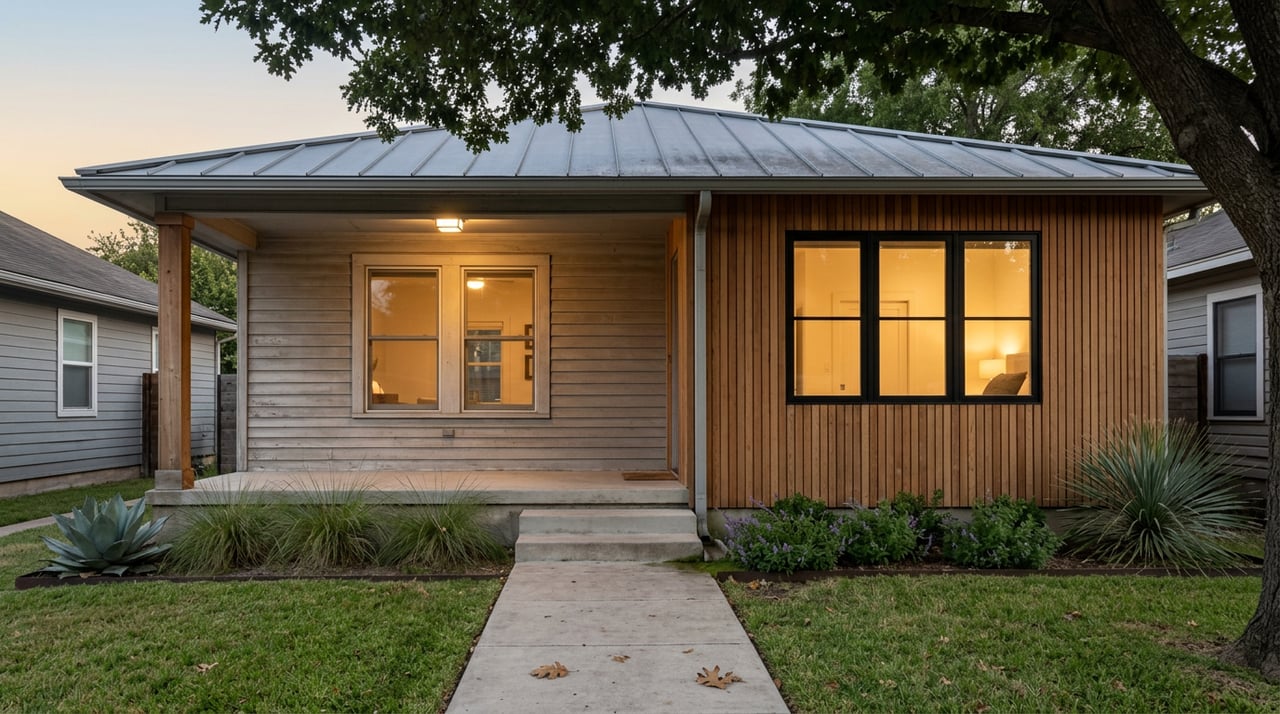
The transformation itself has been dramatic. In the last five years, more than 80 new construction projects have been completed or are underway. Original ranch homes that sat on these lots for 60 or 70 years are being replaced by modern custom builds in the $3 million to $5 million-plus range. The pace of change accelerated sharply during the COVID building boom, when builders who had been focused on other parts of Austin suddenly recognized the opportunity in Barton Hills. Teardown lots that might have quietly traded for $600,000 to $700,000 a few years earlier were suddenly the subject of intense competition.

The New Construction Boom: How Barton Hills Changed

The story of new construction in Barton Hills is really a story about land values. When builders arrived during the COVID boom, they weren't buying homes — they were buying dirt. The original ranch houses were functionally worthless as structures. What mattered was the lot: its size, its tree coverage, its buildable footprint under Austin's zoning and heritage tree rules, and its location within the neighborhood. Builders who understood this moved fast. Builders who didn't learned expensive lessons.

I watched this play out on my own street. In early 2021, I sold a lot for $875,000. Within a year, comparable lots were trading at $1.3 million to $1.5 million. By spring 2022, one lot went to a bidding war that reached $1.725 million — a developer paid that price for a teardown, planning to build a home and sell at $1,200 per square foot. Then interest rates spiked in the summer of 2022. That developer's projected $1,200 per square foot only brought $900 per square foot at sale. The loss was significant. That story played out across Austin, but it was particularly acute in Barton Hills because the land basis was already so high.

The builders who survived that correction are the ones operating here today — and they're better for it. They've tightened their budgets, refined their value engineering, and focused on the finishes and construction quality that actually justify a $3 million to $5 million price tag. The speculative frenzy is over. What's left is a more disciplined market with builders who know exactly what Barton Hills buyers want and what it costs to deliver it.

What I Learned Building My Own Home in Barton Hills

Most agents advise clients on new construction from a distance. I went through the entire process myself — and it fundamentally changed the way I represent buyers and developers in this market. When my family outgrew our original ranch home, we decided to build rather than buy. I hired Cobb Development as the general contractor, a builder I'd already partnered with on multiple developer projects in the neighborhood. Forsite Studio designed the home — an architect I'd worked with for years and whose design sensibility I trusted completely.

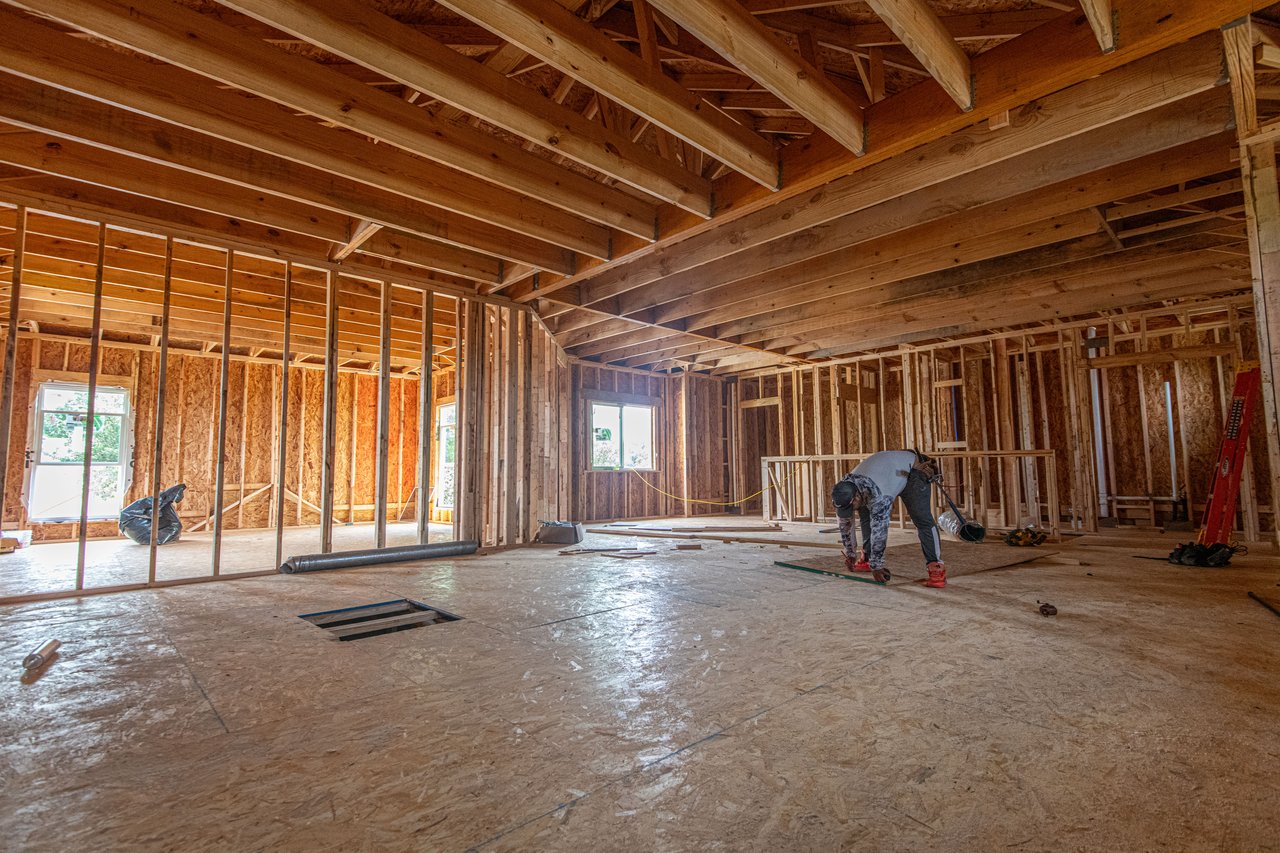
What I didn't expect was how hands-on I'd need to be. Cobb was running 18 to 20 projects simultaneously at the peak of the building boom. If I wanted my home built to the standard I expected, I had to become the de facto project manager. I was on-site daily, coordinating subcontractors, reviewing material selections, solving problems in real time. It was the most intense professional education of my career, and it gave me a level of construction knowledge that most agents simply don't have.

Here's what that experience taught me about building in Barton Hills specifically. Heritage trees dictate everything. Austin's ordinance protects any tree with a trunk diameter of 19 inches or more, regardless of species, and Barton Hills is full of mature oaks and pecans that fall into that category. The tree survey isn't a formality — it's the single most important document in your feasibility analysis because it determines your building envelope. I've seen lots that look perfect on paper become nearly unbuildable once the heritage trees are mapped. On the flip side, the best new construction in Barton Hills embraces those trees. They become part of the architecture, part of the outdoor living design, and ultimately part of the home's value.

Looking for homes in Barton Hills?

Search Barton Hills Homes

Value Engineering: Where Smart Builders Spend and Where They Save

One of the biggest lessons from building my own home and advising builders on 30-plus projects in Barton Hills is understanding where money actually moves the needle — and where it doesn't. The best builders in this neighborhood aren't the ones spending the most. They're the ones spending the most wisely.

Appliances are the clearest example. Thermador, Bosch, and LG deliver outstanding performance and reliability at a price point that makes sense for the build budget. Wolf and Sub-Zero carry a brand premium that doesn't translate to meaningfully better cooking or refrigeration in a residential kitchen. The smart builder puts Thermador in the kitchen and invests the savings where it actually matters. One absolute rule: never Samsung. The service track record doesn't justify the risk at any price point.

Windows are another area where the math favors the informed buyer. Andersen windows perform comparably to Western windows at a fraction of the cost. Unless the architectural design specifically demands a custom window profile that only Western can provide, Andersen is the right call. The same principle applies to cabinetry — quality prefabricated cabinets from the right manufacturer look and function as well as fully custom millwork for most residential applications. Save the custom budget for the built-in pieces that are genuinely one-of-a-kind.

Where you should never cut corners: HVAC. In Austin's climate, with summer temperatures regularly exceeding 100 degrees, the mechanical system is the backbone of the home. A properly sized, high-efficiency HVAC system with quality ductwork and insulation isn't an upgrade — it's a requirement. Builders who skimp on mechanicals to hit a price point are creating problems that the buyer will pay for in comfort, energy bills, and repair costs for years to come.

Schools, Trails, and the Barton Hills Lifestyle

If you're buying in Barton Hills with a family, the school is likely your first question. Barton Hills Elementary is one of the top-rated elementary schools in the Austin Independent School District, and it lives up to its reputation. The academic programs are strong, the parent involvement is exceptional, and the school functions as the social backbone of the neighborhood. I've met more clients, more builder partners, and more lifelong friends through Barton Hills Elementary than through any other channel in my career. That's not an exaggeration — it's a statement about how this community operates.

Beyond the school, the natural amenities define daily life here. The Barton Creek Greenbelt is Barton Hills' backyard. Multiple trailheads provide direct access from within the neighborhood — you can walk out your door, hit the trail, and be swimming in a Greenbelt creek within minutes. Barton Springs Pool, the legendary spring-fed swimming hole that holds a steady 68 degrees year-round, is just north of the neighborhood in Zilker Park. Zilker Park itself — 350 acres of green space with trails, sports fields, and event grounds — is walkable from most of Barton Hills. Lady Bird Lake's hike and bike trail is a short drive or bike ride north.

What buyers often underestimate is how much this access shapes the resale value. Proximity to the Greenbelt and Barton Springs isn't just a lifestyle selling point — it's a structural market advantage. Homes with direct or near-direct trail access consistently command a premium over comparable homes farther from the green infrastructure. The outdoor amenities are permanent. They don't depreciate. And they can't be replicated anywhere else in the city.

What Defines Barton Hills

Four Reasons Buyers Choose Barton Hills

Direct Greenbelt Access

Multiple neighborhood trailheads connect directly to the Barton Creek Greenbelt — miles of hiking, biking, and swimming within walking distance of your front door. Barton Springs Pool and Zilker Park are minutes away without getting in a car.

Top-Rated Elementary School

Barton Hills Elementary is consistently one of the highest-rated schools in AISD. The school's strong parent involvement creates a social network that extends well beyond the classroom and defines the community culture.

New Construction Expertise

With 30-plus new builds in five years, Barton Hills has the deepest pool of experienced local builders, architects, and subcontractors in 78704. Buyers benefit from a construction ecosystem that has been refined through hundreds of millions in completed projects.

Neighborhood Community

Despite the building boom, Barton Hills has retained the tight-knit character that makes it feel like a neighborhood, not just a collection of houses. Neighbors know each other. Families look out for each other. That culture is increasingly rare in central Austin.

How to Buy a Lot in Barton Hills: What Most Buyers Miss

Buying a lot in Barton Hills is fundamentally different from buying a lot in a master-planned development. Every parcel here has a unique profile of constraints and opportunities: heritage trees, impervious cover limits, deed restrictions, setback requirements, and zoning classifications that vary from block to block. The lot that looks perfect on a listing sheet might have a 36-inch heritage oak dead center that cuts your buildable area in half. The lot that looks problematic on paper might have a clear building pad that an experienced builder can maximize.

The key is feasibility analysis before you write an offer. That means a professional tree survey, a title review for deed restrictions, an impervious cover calculation, and ideally a preliminary conversation with an architect or builder who has worked in Barton Hills before. I walk every lot I evaluate with this checklist, because I've seen too many buyers — and too many builders — discover deal-killing constraints after they've already committed capital.

Off-market opportunities are particularly important in Barton Hills. The neighborhood is small enough that most of the desirable lots trade through personal relationships before they hit the MLS. A longtime homeowner mentions at a school event that they're thinking about downsizing. A builder asks me if I know anyone on a specific block who might sell. Those conversations happen because I've lived here for over a decade and built relationships with families throughout the neighborhood. For buyers and builders who want access to Barton Hills inventory, being connected to someone embedded in the community isn't a nice-to-have — it's the primary acquisition channel.

Have Questions About Barton Hills?

Talk to a Local Expert: (512) 608-8811
Common Questions

Frequently Asked About Barton Hills

What are homes in Barton Hills Austin selling for right now?

Barton Hills home prices depend on whether you're looking at original homes or new construction. Unrenovated 1950s and 1960s ranch homes — typically purchased as teardowns — sell based on lot value, which ranges from roughly $900,000 to $1.3 million or more depending on size, tree coverage, and buildability. New construction typically ranges from $3 million to $5 million-plus, with pricing around $1,000 per square foot for a well-built custom home. During the 2021-2022 peak, lot prices spiked as high as $1.725 million in bidding wars, and new builds were selling at $1,100 to $1,200 per square foot. The market has since corrected to more sustainable levels.

Is Barton Hills Elementary a good school?

Barton Hills Elementary is consistently rated as one of the top elementary schools in the Austin Independent School District. It is a major draw for families buying in the neighborhood. The school has a strong sense of community, and many residents first connected with their neighbors through school functions, PTA involvement, and programs like Boy Scouts. The school's reputation is one of the primary reasons families choose Barton Hills over other 78704 neighborhoods.

How much new construction has happened in Barton Hills recently?

More than 80 new construction projects have been completed in Barton Hills over the last five years, making it one of the fastest-transforming neighborhoods in 78704. The COVID-era boom brought multiple builders into the area who acquired original ranch homes as teardown lots — some acquiring five to six lots within a single six-to-seven-month period. While the pace has moderated from the 2021-2022 peak, new construction continues with builders who survived the correction and now operate with tighter budgets and better processes.

What should I know about heritage trees in Barton Hills before buying a lot?

Austin's heritage tree ordinance is especially critical in Barton Hills, where the mature tree canopy is a defining feature. Any tree with a trunk diameter of 16 inches or more is protected regardless of species and cannot be removed. The root zone of a heritage tree significantly limits the building envelope — dictating foundation placement, home size, and even driveway location. Always get a professional tree survey before making an offer on a Barton Hills lot. Heritage oaks in particular can make a parcel extremely difficult to develop if not accounted for from day one.

What is it like living in Barton Hills Austin?

Barton Hills has a tight-knit, neighborhood-oriented feel that's increasingly rare in a city Austin's size. Residents walk to the Barton Creek Greenbelt from direct trailheads, swim at Barton Springs Pool, and access Zilker Park without getting in a car. The community is active — neighbors know each other through school events, local gatherings, and years of shared history. Even as new construction has transformed the housing stock, the neighborhood has retained its identity as a place where families put down roots.

What finishes and features should I expect in a Barton Hills new build?

In the $3 million to $5 million range, expect high-quality appliances like Thermador, Bosch, or LG — brands that deliver performance without the markup of Wolf or Sub-Zero. Smart builders use Andersen windows, quality prefabricated cabinetry, and invest heavily where it matters most: HVAC, insulation, and structural integrity. Avoid Samsung appliances entirely. Pre-wiring for home automation — lighting, security, audio, and EV charging — is standard at this price point. The best builds also feature indoor-outdoor living spaces and architecture designed around existing heritage trees.

Thinking About Buying in Barton Hills?

Whether you're looking at new construction, a teardown lot, or an existing home — having an agent who lives in Barton Hills and has built here personally gives you an advantage no one else can offer.

TREC License #558841 · CLHMS Certified · Barton Hills Resident

Work With a Team That Knows the Market

At The Davis Agency, we believe real estate should be personal, strategic, and rewarding. Whether you’re buying your first home, expanding your investment portfolio, or exploring development opportunities, our boutique approach ensures you receive tailored guidance every step of the way. With deep knowledge of both the Austin and Houston markets, we’re here to help you make confident decisions and achieve your real estate goals.

Follow Us on Instagram