Is your Allandale ranch feeling tight, dated, or just ready for a big change? You are not alone. Many midcentury homes here sit on great lots with mature trees, but the structures and systems are showing their age. In this guide, you will learn how to weigh remodel vs rebuild through the lens of foundations, trees, permits, costs, ROI, and financing so you can protect value and plan with confidence. Let’s dive in.
Allandale at a glance
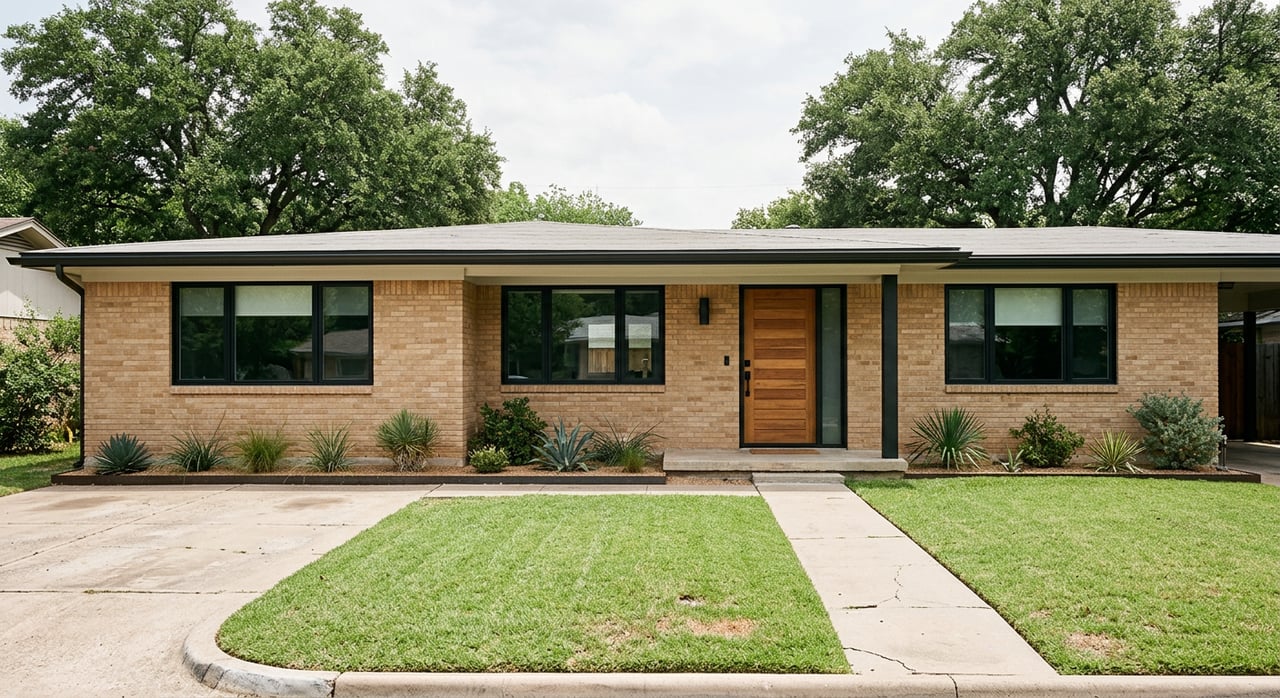
Allandale sits in north central Austin, generally bounded by Burnet Road, MoPac, West Anderson Lane, and Shoal Creek. For a quick neighborhood overview, see the Allandale entry on Wikipedia. The area is known for single story ranches and bungalows from the 1950s and 1960s, typically 3 bedrooms and 1 to 2 baths. Many original homes measure roughly 900 to 1,500 square feet on lots around 7,000 to 12,000 square feet.
You will also find an active neighborhood association and a strong tree canopy, which are part of the area’s appeal. Learn more about local civic life via the Allandale Neighborhood Association.
The site realities that decide your path
Foundations and expansive soils
Central Texas clay expands and contracts with moisture cycles. That movement often shows up as slab settlement or heaving. The City of Austin’s hazard planning highlights expansive soils as a routine design factor, so foundation condition should be one of your first checks. Review the city’s context in the Hazard Mitigation Plan.
If a structural engineer recommends deep piers, slab replacement, or major drainage fixes, renovation budgets climb fast. Local contractor guidance shows repair programs can range from several thousand dollars to the mid to high five figures on complex cases. For a primer on cost scale and methods, see this Austin slab overview from Hammer & Hearth.
Trees, drainage, and impervious cover
Allandale’s mature trees add value, but they also guide design. The City of Austin requires tree surveys and often preservation plans or mitigation when you add area or rebuild. Impervious cover limits and drainage requirements can change where and how much you can build. Get familiar with plan review expectations on the Residential Plan Review page.
Hazardous materials and aging systems
Homes built before 1978 can contain lead paint, and asbestos may be present in midcentury materials. Disturbing these materials requires certified practices and can add cost and time. The EPA explains homeowner and contractor obligations under the RRP rule in its Renovation, Repair and Painting guidance.
Expect older electrical panels, cast iron or galvanized plumbing, minimal insulation, and end‑of‑life HVAC in many originals. Moving walls or opening the plan can trigger code upgrades and more extensive MEP work than you might assume.
A step-by-step decision framework
1) Start with targeted inspections
- Order a general home inspection and a licensed structural engineer evaluation. If major work is likely, add a geotechnical report to understand soil conditions.
- If large trees are near your footprint, get a tree survey and early input on preservation. City reviewers will flag tree and watershed issues during plan review. See the Residential Plan Review page for process basics.
- For pre‑1978 homes, arrange lead and asbestos screening and plan for certified abatement if needed. The EPA outlines rules and consumer guidance in the RRP program overview.
2) Collect apples-to-apples bids
- Get written estimates for both paths: (A) a renovation that keeps the footprint and (B) a teardown plus new build.
- Include demolition, site prep, tree mitigation, utility reconnections, permits, architect/engineer fees, and a 10 to 20 percent contingency in both budgets.
- Use Austin builders or estimators so you capture site-specific costs like tree protection, soils, and impervious cover constraints.
3) Read the economic signals
- Foundation program size is a key pivot. If recommended work includes deep piers, slab replacement, or significant drainage fixes, a rebuild can be more straightforward on cost, schedule, and long‑term risk. For typical repair scales, see this Austin slab cost overview.
- Layout and function matter. If the home’s plan cannot be opened or modernized without removing multiple load‑bearing walls and relocating major systems, a new build may be the more efficient route.
- Value capture in Allandale often comes from high‑impact interior updates and better indoor/outdoor flow. Regional data shows stronger cost recoup for modest-to-midrange kitchens and key exterior projects. Use Austin’s latest Cost vs. Value benchmarks to pressure test scope.
4) Check financing and program limits
- Renovation mortgages can roll repairs into your first mortgage. Fannie Mae’s HomeStyle program is a common option, but product rules apply and some renovation loans do not allow full teardown plus new construction. Review the scope and appraisal workflow in the HomeStyle Renovation guide.
- Construction-to-permanent loans, or separate construction loans, have different down payment, underwriting, and draw schedules. Discuss timing and carry costs with your lender early.
5) Weigh time and disruption
- Renovating while you live in the home can extend timelines and daily disruption.
- A teardown requires moving out longer but can deliver a faster path to a fully code-compliant result with fewer surprises.
Resale impact in Allandale
Allandale sits in the upper tier of central Austin pricing, with recent snapshots placing many sales in the mid six to low seven figure range. Short-term market direction and lot specifics always matter, so run conservative scenarios with recent local comps.
- Targeted remodels. Thoughtful kitchens, refreshed baths, better indoor/outdoor flow, and system upgrades typically shorten market time and raise price potential. Austin’s Cost vs. Value data shows stronger returns for modest kitchen and exterior projects than for very large additions.
- Rebuilds. In Allandale, land and location carry significant weight. On suitable lots, a modern new build often sells at a premium to cosmetically updated originals. When tree rules, impervious cover, and compatibility standards allow, rebuild economics can pencil for both investors and owner‑builders.
Tip: Austin’s Residential Design and Compatibility Standards can influence massing and floor area on some lots. Review applicability on the city’s codes and resources page.
Your pre-conversation checklist
Save this list before you call a designer or builder.
- Order a full home inspection, a structural engineer inspection, and consider a geotechnical report if you plan to add or rebuild.
- Get a tree survey and identify protected or heritage trees. Confirm likely preservation or mitigation requirements with a city reviewer. Start with the Residential Plan Review page.
- Screen for lead and asbestos if your home predates 1978, and budget for certified abatement as needed using the EPA RRP guidance.
- Collect three written bids: cosmetic remodel, major structural remodel, and teardown plus new build. Include soft costs and a 10 to 20 percent contingency in all three.
- Confirm permit timelines and whether compatibility standards may affect your design. See the city’s codes and resources page.
- Talk to a lender about financing. Compare renovation mortgages like HomeStyle, FHA 203(k) overviews such as this guide, and construction-to-perm options. Verify whether your preferred product allows full teardown.
- Run simple ARV math. Estimate after-repair value using local comps, subtract all costs and carrying, and compare the result against a conservative builder-grade new construction scenario for your lot.
Ready for a deeper, lot-specific look at your options? Talk with Derrik Davis for a targeted feasibility review and a data-informed plan to protect your value.
FAQs
What should Allandale homeowners check first when deciding to remodel or rebuild?
- Start with a structural engineer evaluation of the foundation, a tree survey, and hazard screening for lead and asbestos to understand scope, cost, and permit implications.
How do Austin’s tree rules affect rebuilding in Allandale?
- Protected and heritage trees can limit placement, grading, and demolition, and may require preservation plans or mitigation; the City outlines expectations on the Residential Plan Review page.
Why are expansive soils such a big factor in Allandale remodel budgets?
- Central Texas clays expand and contract, which can move slabs; major stabilization programs raise renovation costs quickly and can make a new build more efficient.
Which renovations typically deliver better ROI in Austin’s market?
- Modest-to-midrange kitchen updates and key exterior projects often recoup more than large additions, based on Austin’s latest Cost vs. Value benchmarks.
Can I use a renovation loan for a teardown and new build in Allandale?
- Some renovation products exclude complete teardown plus new construction, so verify rules early; compare HomeStyle and FHA 203(k) to construction-to-perm options with your lender.